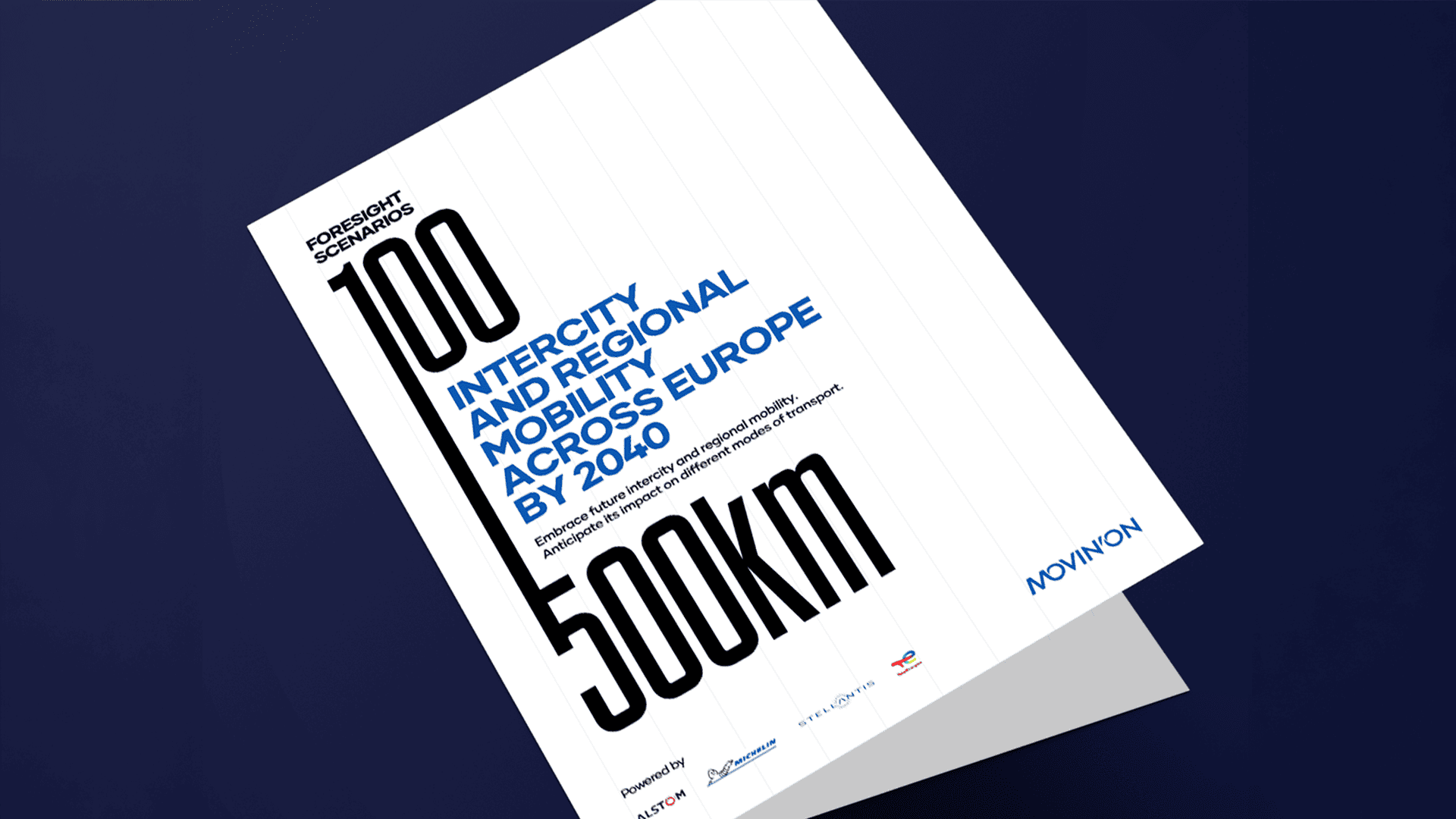
These quantified scenarios—including modal share projections—offer a cross-cutting view of the potential disruptions, risks and opportunities that could reshape intercity and regional mobility by 2040. They were developed to help mobility stakeholders anticipate and prepare for the major transformations ahead in this key segment.
CURRENT CONTEXT
Cars dominate this mobility segment, accounting for 72% of modal share, primarily for leisure and personal travel.
Two types of mobility can be distinguished: short-distance mobility, which is daily, work-related and largely necessity-driven, and long-distance mobility, linked to holidays or opportunities, which has grown significantly with the rise of low-cost air travel.
These two forms of mobility make journeys of 100 to 500 km a strategic segment with significant potential for transformation.
“This work is both a framework for thinking together and a tool for taking action together, enabling us to address the mobility challenges of tomorrow with consistency, imagination and determination.” Bruno Bourdon, Movin’On
“These scenarios serve as a mirror, revealing the consequences of our choices and encouraging us to shape a future that balances people’s needs with those of the planet.” Juliana Buelvas Ceballos, Alstom
Use this report to anticipate the future of intercity and regional mobility, assess its impacts and shape your strategy.
Report co-authors:
Juliana Buelvas Ceballos, Strategy Foresight Innovation Leader, Alstom
Bruno Bourdon, Content and Impact Director, Movin’On
Robert Thai, Innovation Manager, Alstom
Angélique Brunon, Energy Market Analyst Manager, TotalEnergies
Géraldine Pinol, Head of Open Innovation and Business Acceleration, TotalEnergies
Anne Bardot, Trends and Foresight Director, Stellantis
Xin Ye, Foresight Manager, Michelin