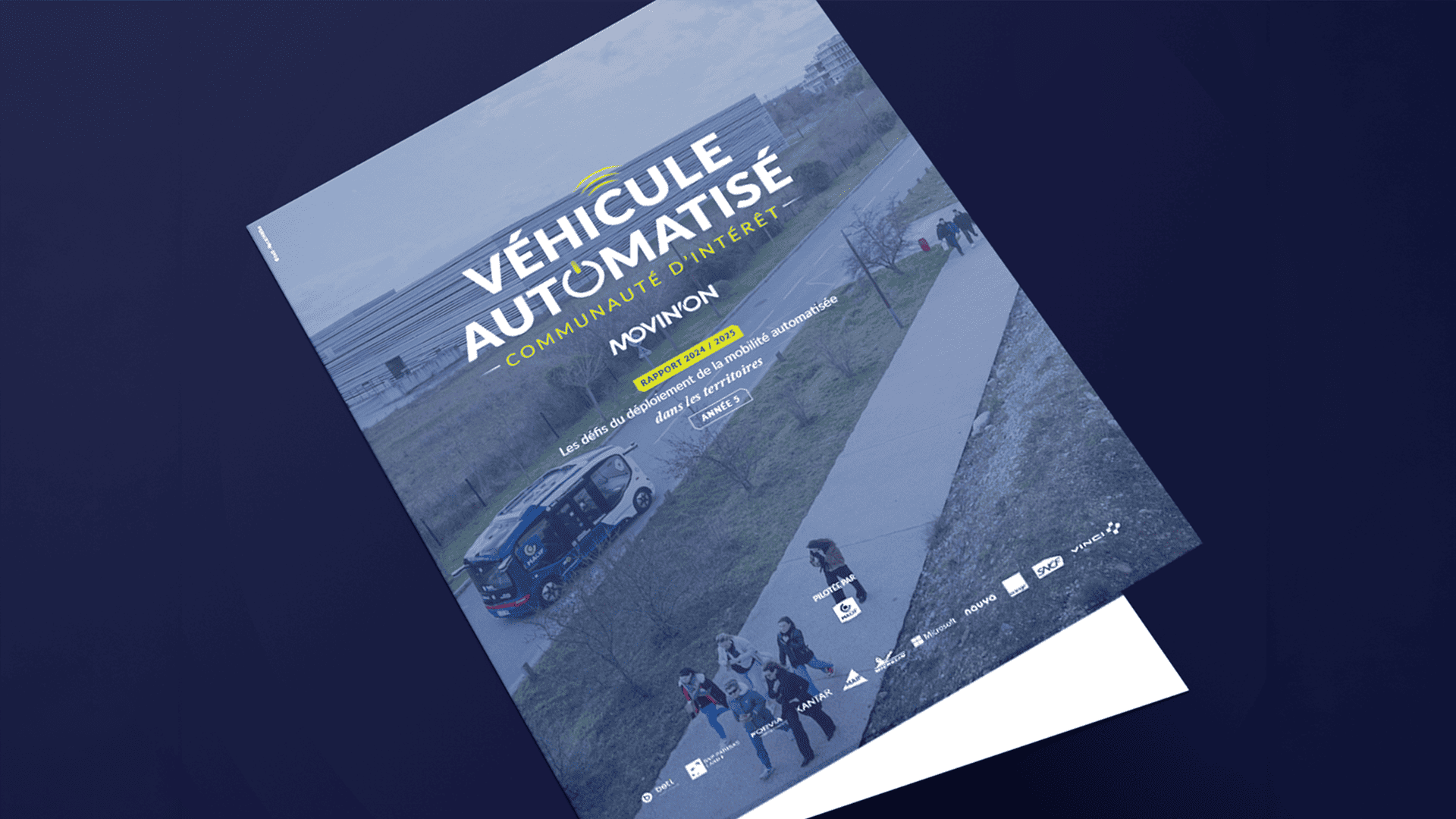
Since its launch in 2019, the Movin’On Community of Interest on Automated Vehicles (CIVA) has been working to make this vision a reality: a more sustainable and inclusive future for people living in low-density areas. With both a scientific and operational perspective, it brings together twelve leading companies: beti, BNP Paribas Cardif, Forvia, Kantar, Macif, Maif, Navya, Michelin, Microsoft, Orange, SNCF and Vinci. It also draws on an Advisory Board made up of experts, researchers and elected representatives.
Its work has demonstrated the value of deploying automated shuttles in rural and peri-urban areas. It has also highlighted the importance of supporting local authorities as they introduce these new mobility services. The French government reaffirmed this priority in successive updates to its national strategy for the development of automated and connected road mobility, led by Anne-Marie Idrac.
Against this backdrop, the CIVA’s fifth report shows just how forward-looking and relevant its work remains.
The survey conducted in 2024 on the readiness of French intermunicipal authorities for automated road mobility offers a new and original contribution to this more necessary-than-ever effort to support local areas as they deploy driverless shuttles and buses.
The findings are encouraging, highlighting that favourable conditions for automated road mobility already exist across France. However, they also reveal very limited knowledge of the subject among rural and peri-urban communities of communes. Yet these are the areas with the greatest interest in shared automated vehicles, given their substantial need for public transport.
This assessment of the current readiness of intermunicipal authorities calls for a degree of caution. Despite the ambition of stakeholders across the ecosystem and the enthusiasm of some local elected representatives to finally see automated shuttles operating in their areas, the challenges of deploying them at scale still need to be tested, as the report’s various chapters demonstrate.
In 2025, the CIVA will continue to contribute to efforts to encourage the development of shared and collective automated transport services that are safe, economically viable and high quality, meeting the mobility needs of people in every area.
This fifth annual report presents the new findings produced by the CIVA and its partners as they support local areas in their transition to automated mobility. In these pages, you will discover:
The challenges and opportunities involved in scaling automated transport services in France and internationally.
A detailed analysis of the current readiness of French local areas, along with concrete actions to accelerate their transition.
The economic and social opportunities offered by automated shuttles, as well as their potential to support sustainable development.
How residents experience these new modes of transport, and the key factors underpinning their adoption and success.
This report is intended for experts and local stakeholders alike who want to understand and anticipate the transformation of automated mobility. It both summarises the lessons learned and calls for continued collective action to build sustainable and inclusive mobility that benefits every area.
WELCOME TO AUTOMATED MOBILITY