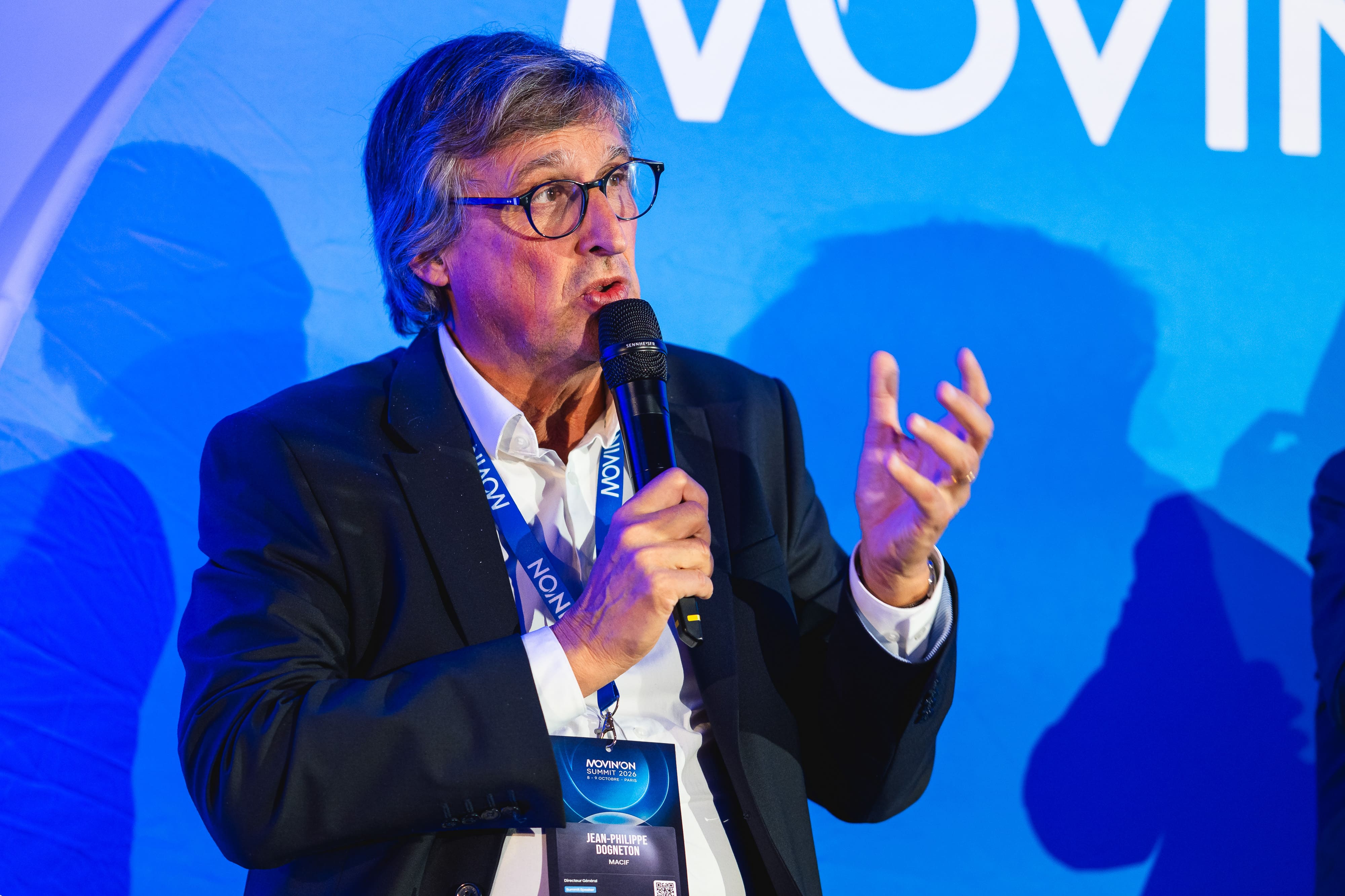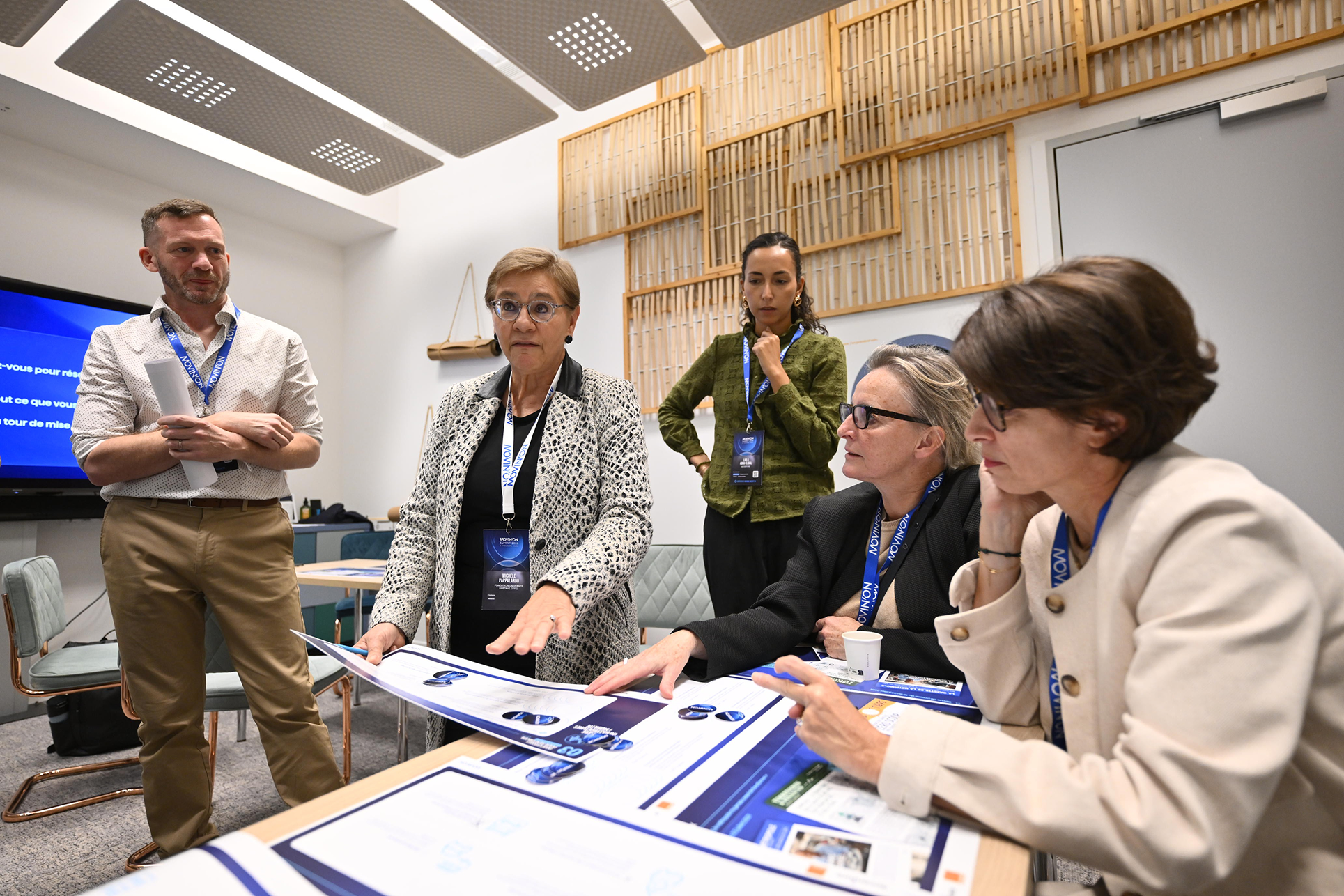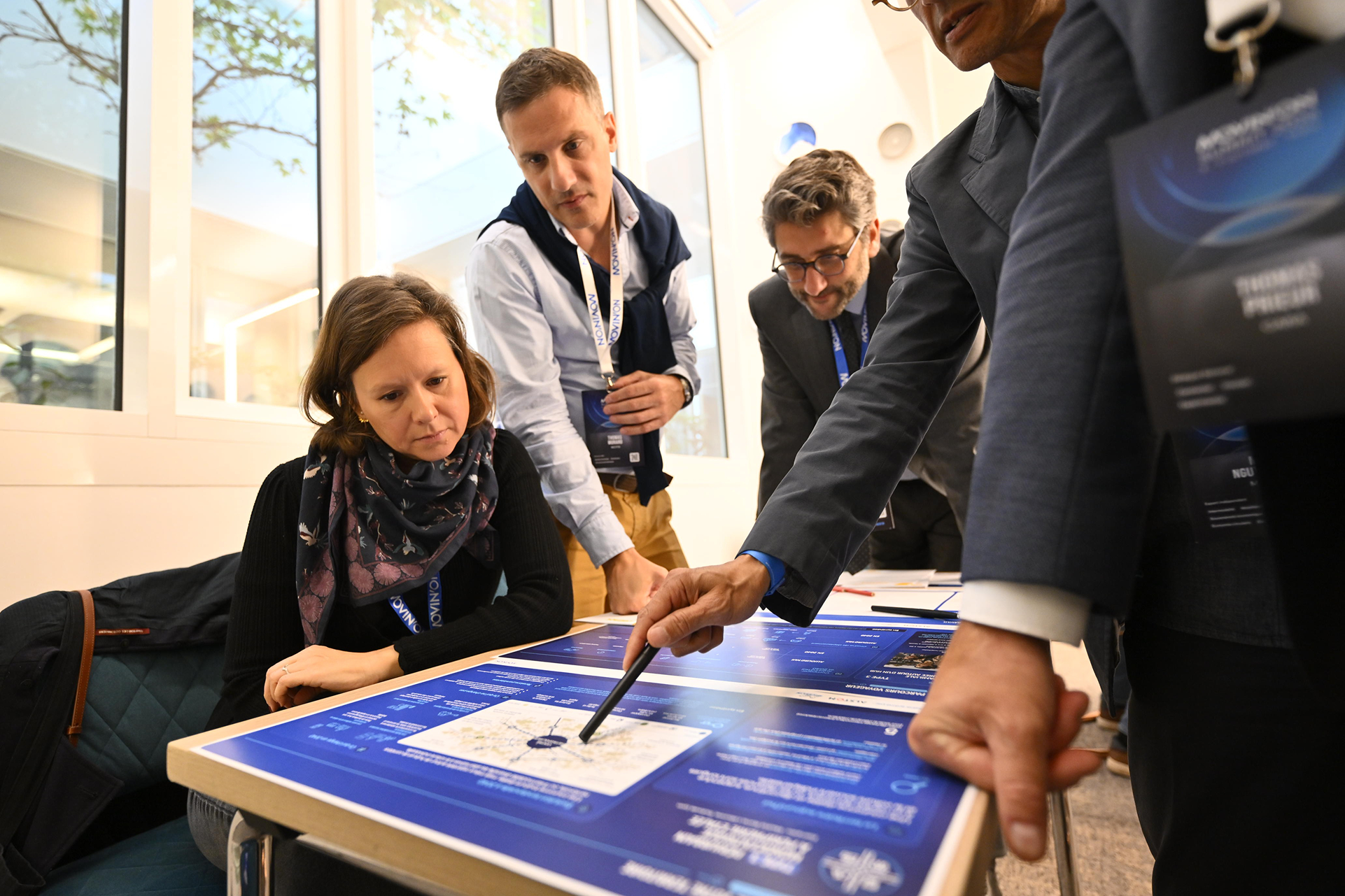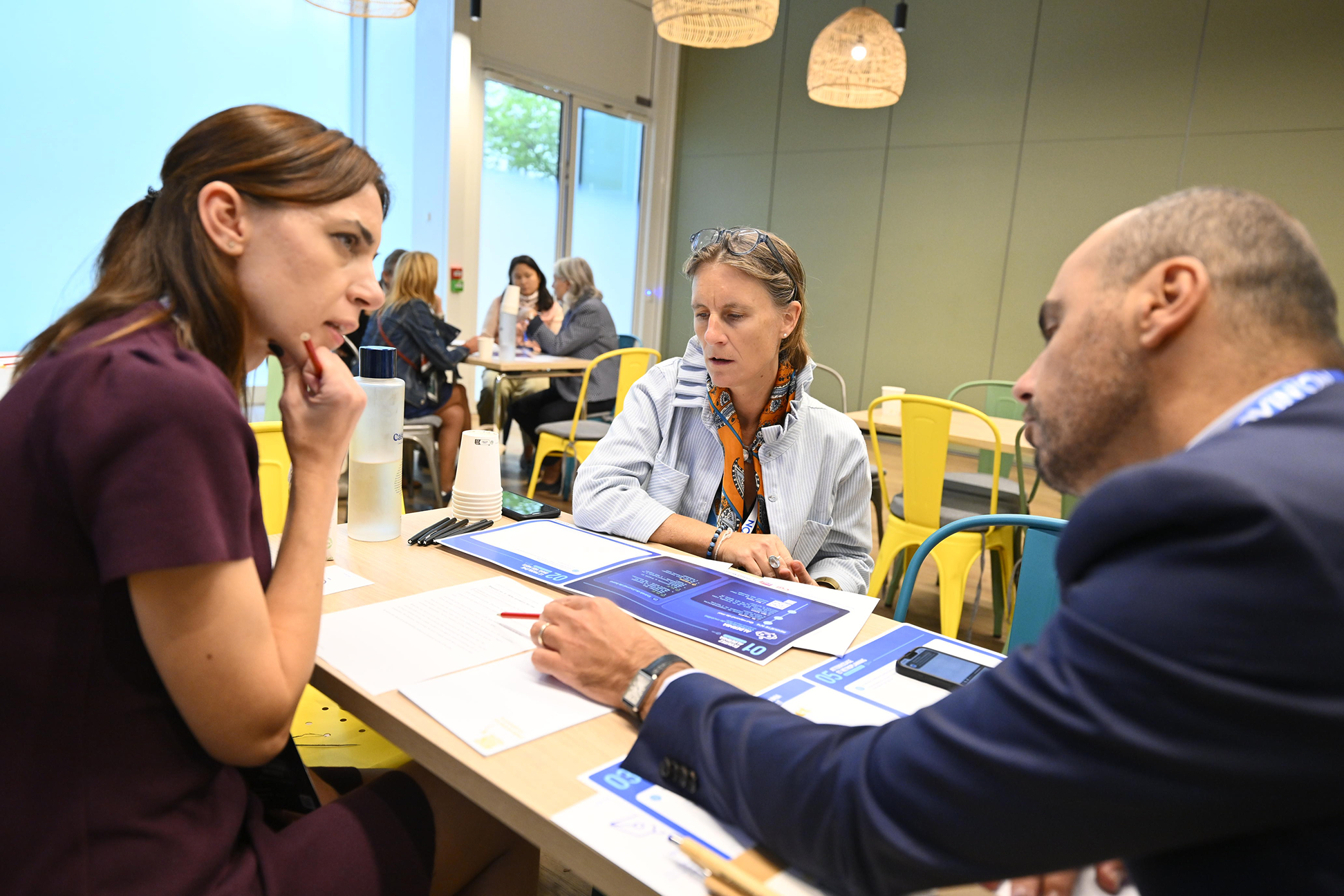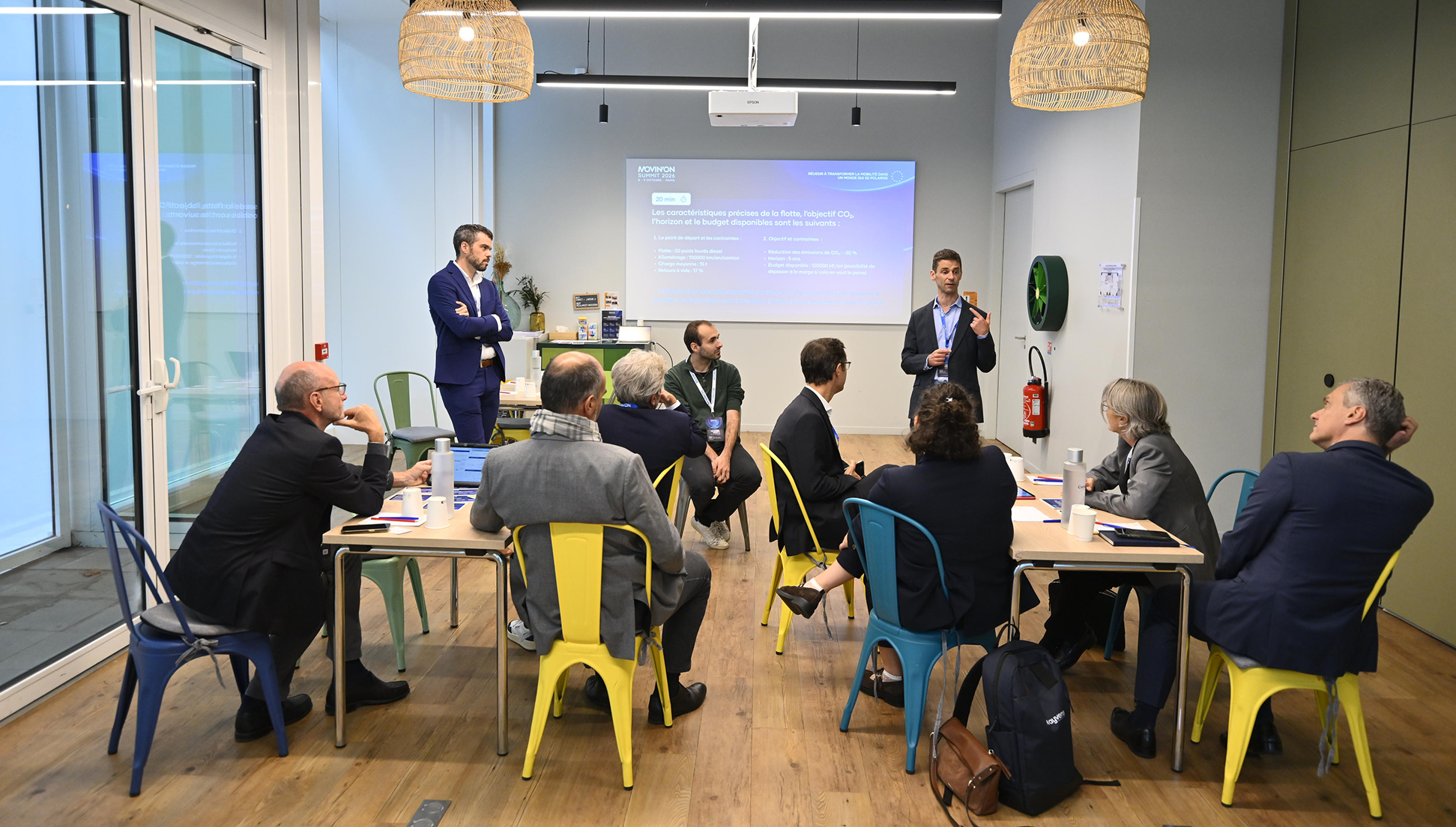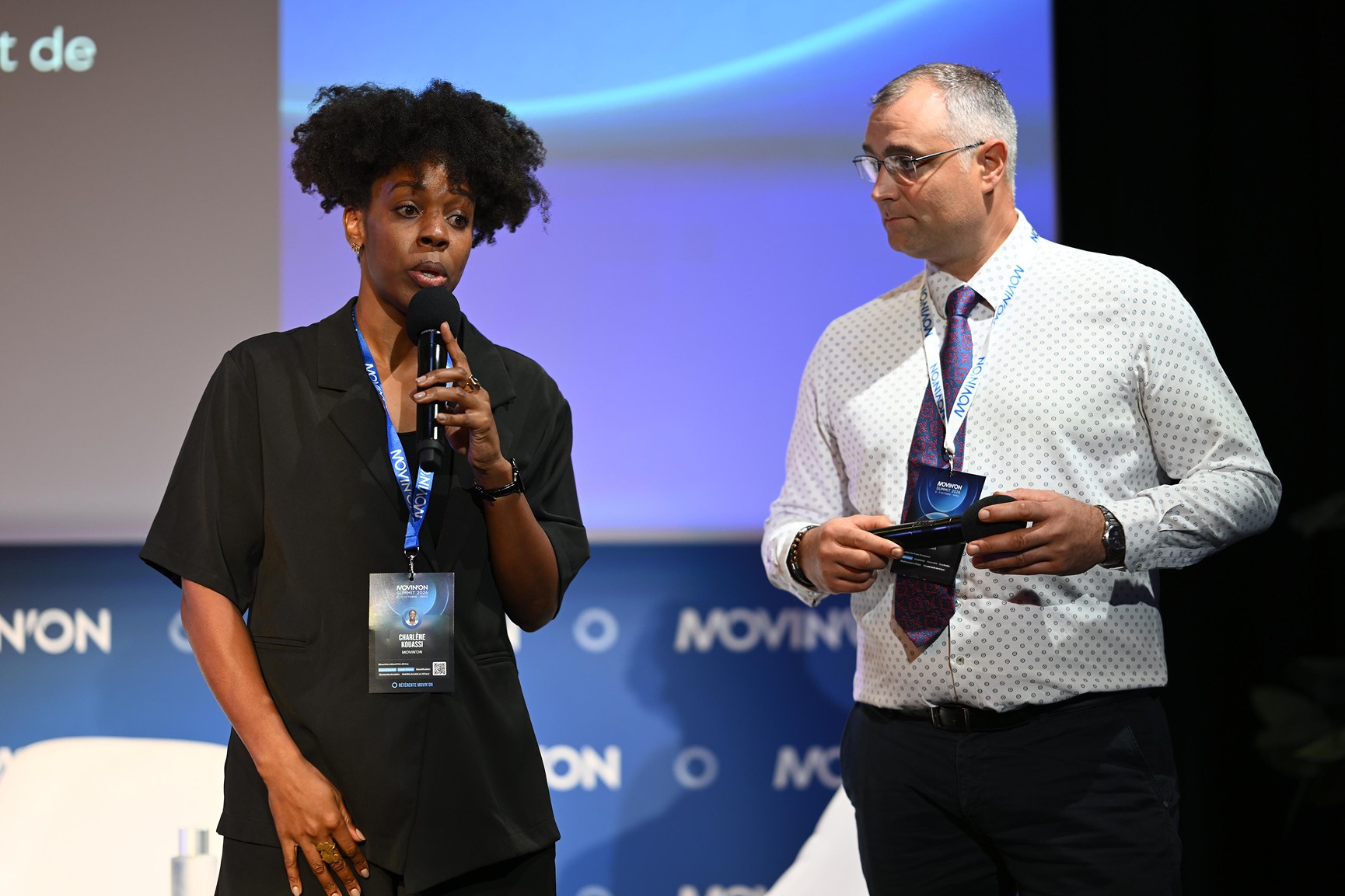
Five imaginary cities, five complex and contrasting mobility systems. The workshop invites participants to immerse themselves in these urban futures, explore their consequences for residents’ daily lives and the movement of goods, then trace the decisions that shaped them. A foresight exercise to examine the risks, opportunities and innovations likely to transform mobility in the years ahead.
On 9 October in Paris, Stellantis and Movin’On invited Summit participants to take a study tour through five fictional European cities in 2040. Developed through a collective process involving more than thirty partners, these futures do not claim to predict the city of tomorrow. Instead, they present five contrasting urban systems shaped by decisions made over time, as well as by adaptations that were delayed or never undertaken.
75% (1) of Europeans live in cities, towns and suburbs.
More than 40% (2) of France’s land area exceeded 40°C at least once during the heatwave in June 2026.
Five cities, five complex mobility systems
A city is defined neither by its dominant mode of transport nor by the share of space given to cars. It simultaneously shapes everyday travel, access to jobs and services, the supply of shops, deliveries, through-traffic and the use of public space. Its networks, geography, economic fabric and climate vulnerabilities are interconnected. Changing one of these elements often reshapes the others, with different effects for residents, businesses and territories.
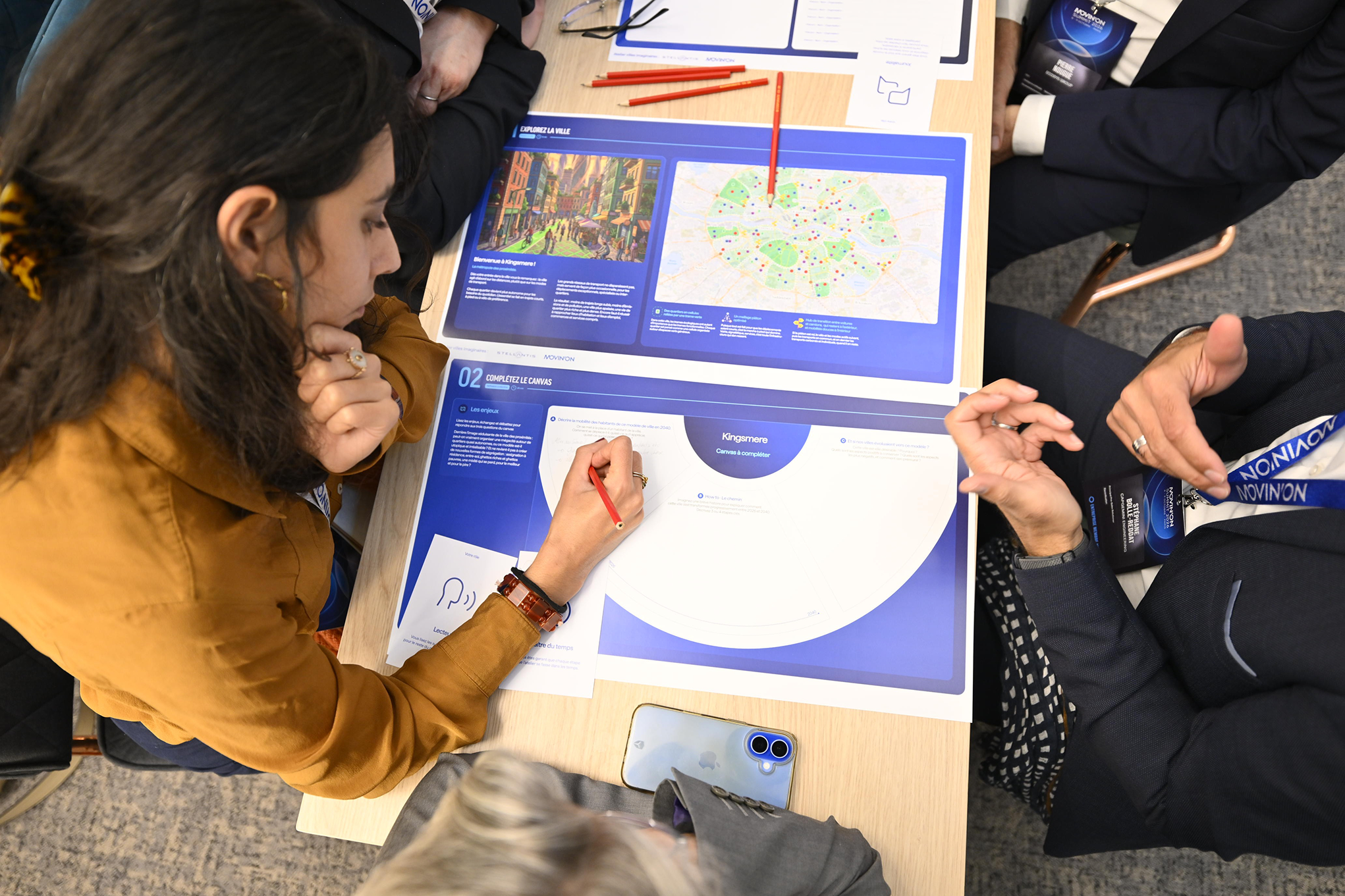
In Tidemoor, an archipelago city exposed to flooding, underground freight, elevated transport and road tolls give space back to residents, while raising questions about cost and access from outside the city. Kingsmere reorganises housing, jobs and services around proximity, but raises questions about freedom of movement beyond the neighbourhood. In Marbury, public transport and traffic-calmed spaces are concentrated in the centre, while the outskirts still depend on cars and overcrowded feeder services. In Calderwick, insufficient adaptation to heat and pollution shifts the burden of protection into private vehicle cabins. In Wrenmouth, a large car-free zone coexists with a historic centre and outlying neighbourhoods: the model’s success depends on a social compact, accessible public transport and sustainable funding. None of these cities can be reduced to a single technology or measure.
System inertia and the sometimes contradictory effects of choices
These cities highlight a major challenge for public and private action: infrastructure, the location of activities and mobility habits shape territories for decades. A decision that benefits one group may shift costs or disruption onto another; a measure that works locally may move the problem elsewhere across the wider urban area. And choosing not to act is also a choice, with effects that accumulate over time. The challenge, then, is not to identify the “best” city, but to understand the trade-offs that make it possible—and who they serve.
A three-part workshop: immerse, trace back, change course
The exercise begins with immersion: participants put themselves in the daily lives of residents, working people, vulnerable groups and the professionals who supply the city. Who can get around easily? Who has to make multiple connections? Which services remain accessible, and at what cost? This role-play brings to light both the opportunities and the risks that global indicators often conceal.
In the second stage, groups work backwards from 2040 to the present: which events, investment trade-offs, governance decisions and chains of cause and effect led to this configuration? What changes in direction could have altered the outcome?
Finally comes the moment to change course: which solutions, innovations or forms of cooperation could preserve the benefits while reducing undesirable effects, particularly for the groups most exposed?
From exploring possible futures to collective action
The first sessions, for example, brought forward the idea of converting car parks into local service and mobility hubs, potentially served by shared autonomous vehicles. But the value of this idea lies less in the concept itself than in the questions it raises: which passenger and freight flows would it reorganise? Who would gain better access? How could it be funded and governed, and how could we ensure it does not simply shift constraints elsewhere? This cross-cutting perspective lies at the heart of Movin’On’s ecosystem approach.
An immersive format and an in-depth format
In its shorter format, lasting around one hour, the workshop lets participants experience the complexity of an urban future and discuss its main effects. In the longer version, lasting 2.5 to 3 hours, companies, local authorities and other organisations can compare several scenarios, examine their consequences for different groups and reflect on their own decisions. The aim is not to produce a definitive action plan in a single session, but to identify pivotal trade-offs, innovations to test and the cooperation needed to bring them to fruition.
Imaginary Cities 2040 therefore prompts a highly practical question: what mobility systems are we already building, sometimes without fully understanding all their effects?