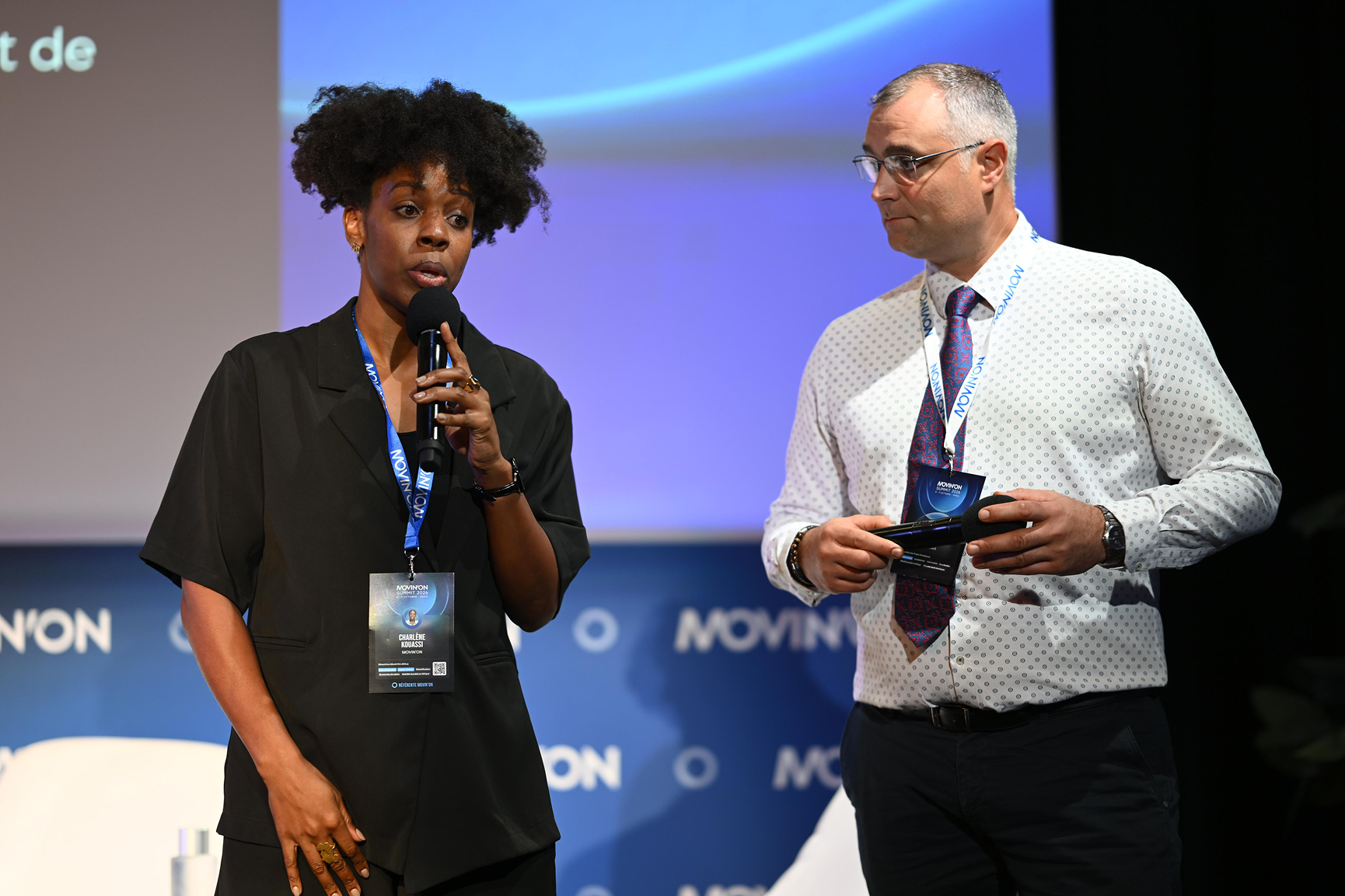
On 9 October in Paris, at the Movin'On Summit, Movin'On's African branch presented business leaders, elected officials, development institutions and financiers with the real barriers affecting daily travel in the metropolitan areas of Abidjan and Dakar, before asking them where action should be prioritised.
Nearly 80%(1) of journeys on public transport in Greater Abidjan are provided by minibuses, shared taxis and motorcycles operated by small businesses, carrying more than five million passengers every day.
€150 billion(2): the European Union's Global Gateway investment package for Africa, reaffirmed in November 2025.
The challenge: major projects, but daily travel runs on a different system
Abidjan and Dakar are investing heavily in public transport: bus rapid transit on dedicated lanes, a regional express railway and a metro system. These networks will transform both metropolitan areas. Yet most daily journeys still rely on what is known as popular transport: shared taxis, minibuses and motorcycles operated by a multitude of small businesses, with limited integration into public planning. The different modes are poorly connected, no unified ticketing system links them, and the first and last mile often remain each traveller's responsibility. As major projects are being decided and European funding priorities take shape, the question is how to bring these two worlds together.
The masterclass: start with the facts, look ahead to 2036, then decide
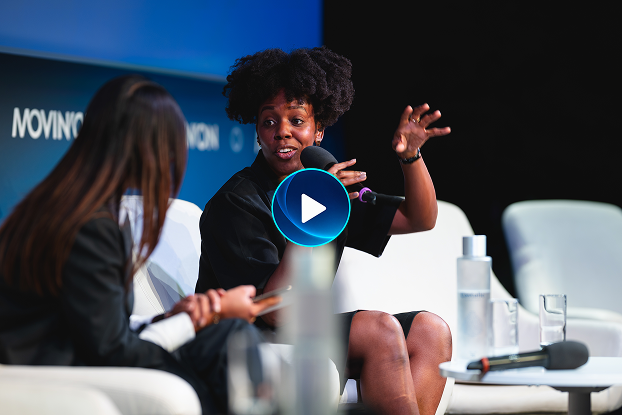
Led by Charlène Kouassi, who heads a working group for Movin'On Africa bringing together Africharger, Alstom, Capgemini, Orange, Scania and TotalEnergies, the session drew on a prior study of the barriers to urban mobility in Abidjan and Dakar3. Based on the experience and needs of stakeholders on the ground, this mapping is designed to rank the barriers and identify the stakeholders best placed to take action.
For the session, the barriers were organised into five broad categories: access to energy; digital and fare integration; urban connectivity and planning; infrastructure and personal safety; and governance. Each category was presented in three minutes, illustrated with photographs of real locations. Two testimonies then described a day in 2036 if these barriers had been removed: Grace, a student living on the outskirts of Abidjan, and Moussa, a former minibus driver who had become a driver for an electric-vehicle cooperative. Finally, the room voted by show of hands on three contentious questions, with minority views heard first.
What emerged
Based on this diagnosis and the discussion it prompted, participants identified three areas for priority action. The first is so-called “informal” popular transport: organising it to support its transition towards sustainable mobility and providing a framework suited to local realities, drawing on service design methods that start with the real-world practices of travellers and operators. The second is women's mobility, with a clear priority: co-creating transport solutions that address their specific needs, starting with safety. The third concerns the role of digital technology in developing mobility across the continent.
Representatives of Orange, Dassault Systèmes and SNCF expressed interest in continuing this work. The workshop's findings will feed into the working group's final mapping, expected in December 2026, with a focused list of priority barriers and proposals for action.
A masterclass organisations can run for themselves
The masterclass was designed to extend beyond the Summit: it enables participants to share a diagnosis, compare priorities and identify the levers an organisation and its partners can use to take action. Movin'On offers it to companies, local authorities and institutions wishing to run it with their teams, partners or leadership bodies, in two formats. The shorter format, lasting 45 minutes to one hour, follows the session delivered at the Summit and gives a leadership team or project team an accurate picture of the two metropolitan areas. The more in-depth format lasts two to four hours, depending on needs and availability, enabling participants to work in small groups on one category of barriers and develop concrete actions their organisation can take locally.