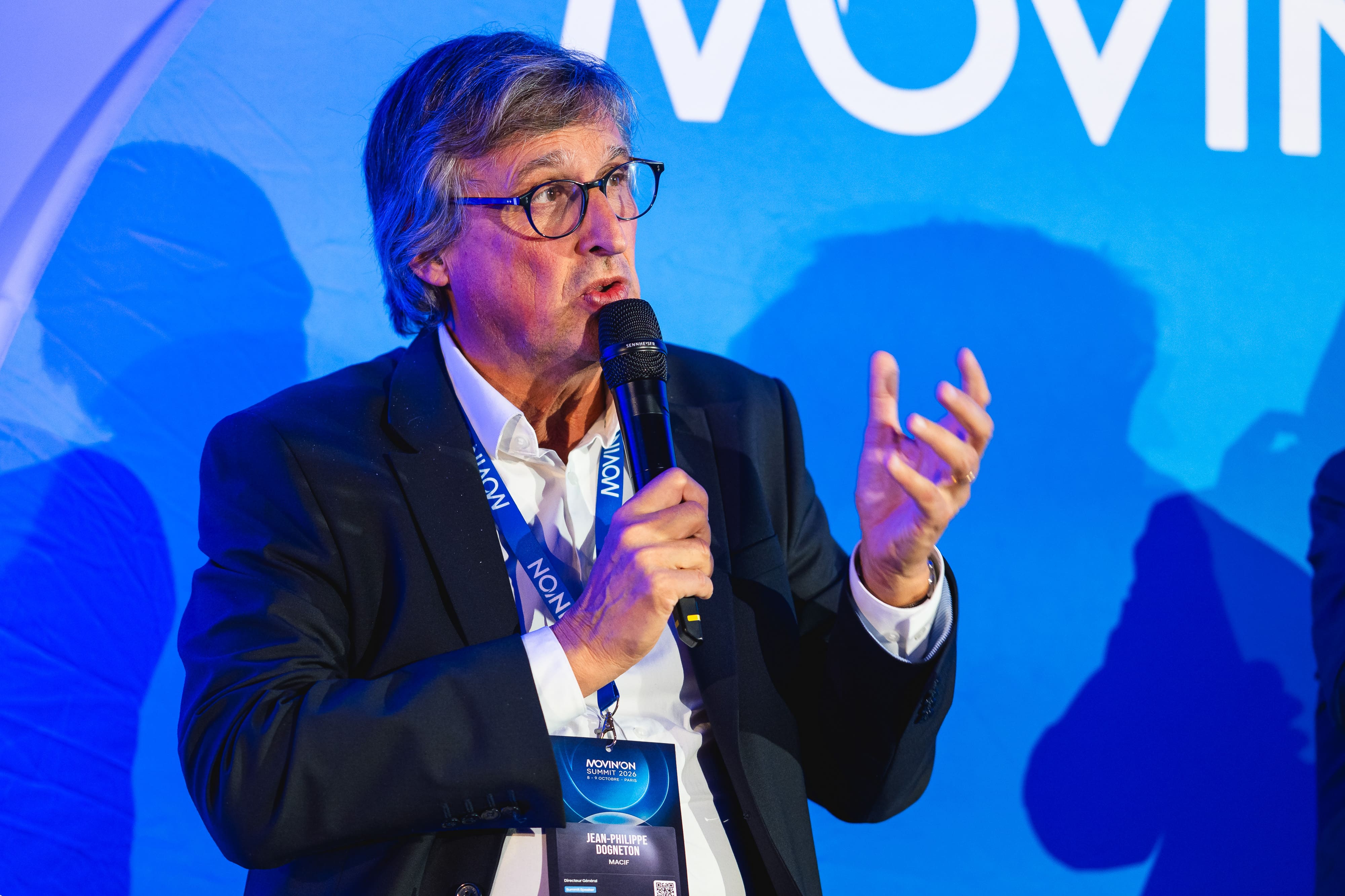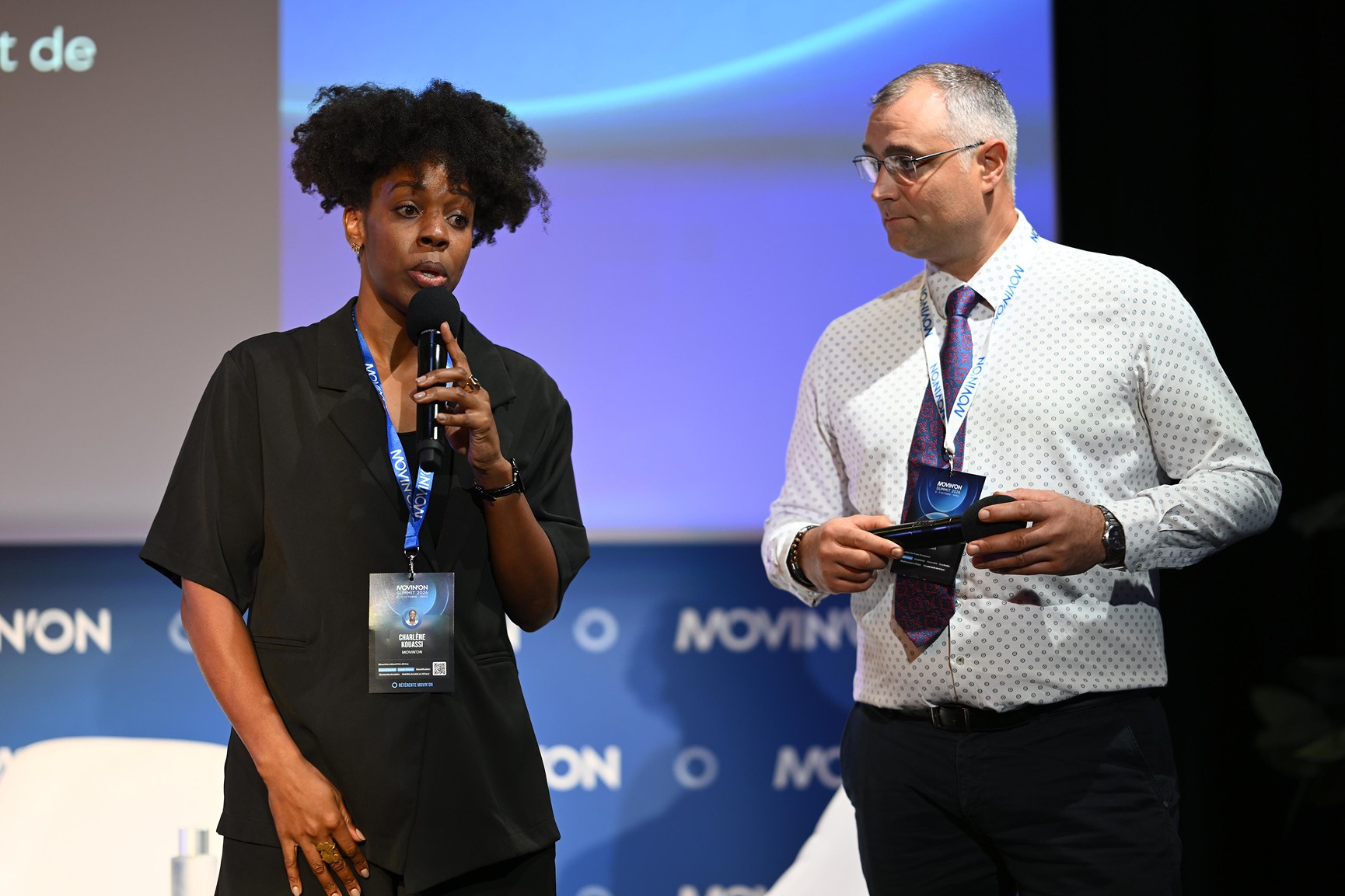
On 9 October in Paris, at the Movin'On Summit, CGI, SNCF and Crédit Mutuel co-hosted a workshop focused on a question that is still rarely asked: what priorities should guide an artificial intelligence system responsible for organising a region's transport network? Business leaders, elected officials and operators left with three concrete avenues for action.
11.2 %1()of European companies in the transport and storage sector used at least one artificial intelligence technology in 2025.
78 %(2) of goods transported by land in the European Union travel by road.
The Challenge: AI Can Optimise—But Someone Has to Tell It What to Optimise
Artificial intelligence is already being used to redesign demand-responsive transport services each morning, optimise delivery routes and restore networks after incidents. But AI optimises whatever it is instructed to optimise. Should speed or emissions take priority? Cost or accessibility? Performance or resilience? These choices are a matter of individual and collective sovereignty: they cannot be left to the people who design algorithms or the platforms that operate them. As AI takes on a greater role in organising mobility, transport stakeholders, businesses, citizens and public authorities must therefore define together the objectives, rules and responsibilities that govern its action.
The Workshop: An AI from 2035 Asks Humans for Help
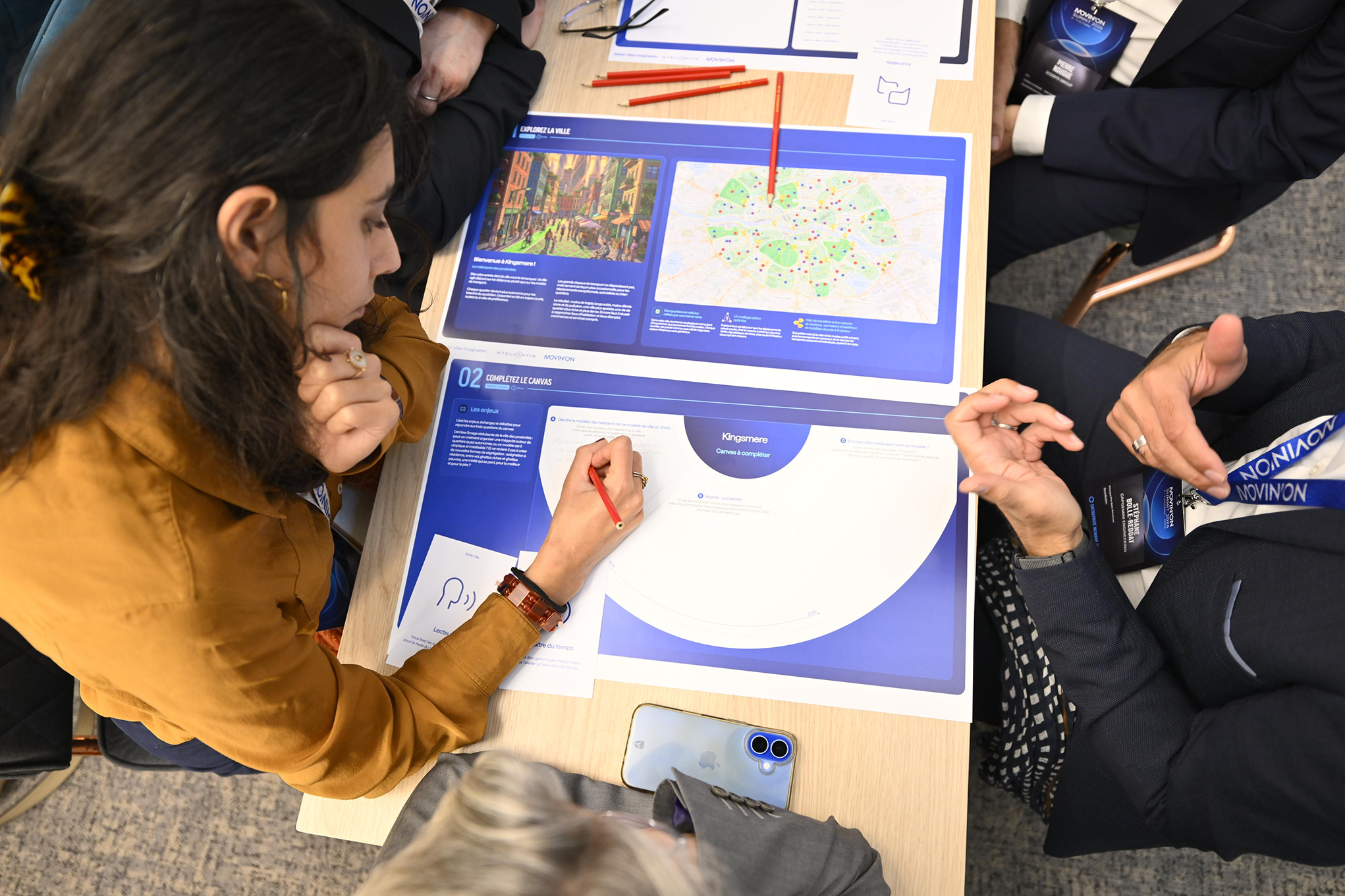
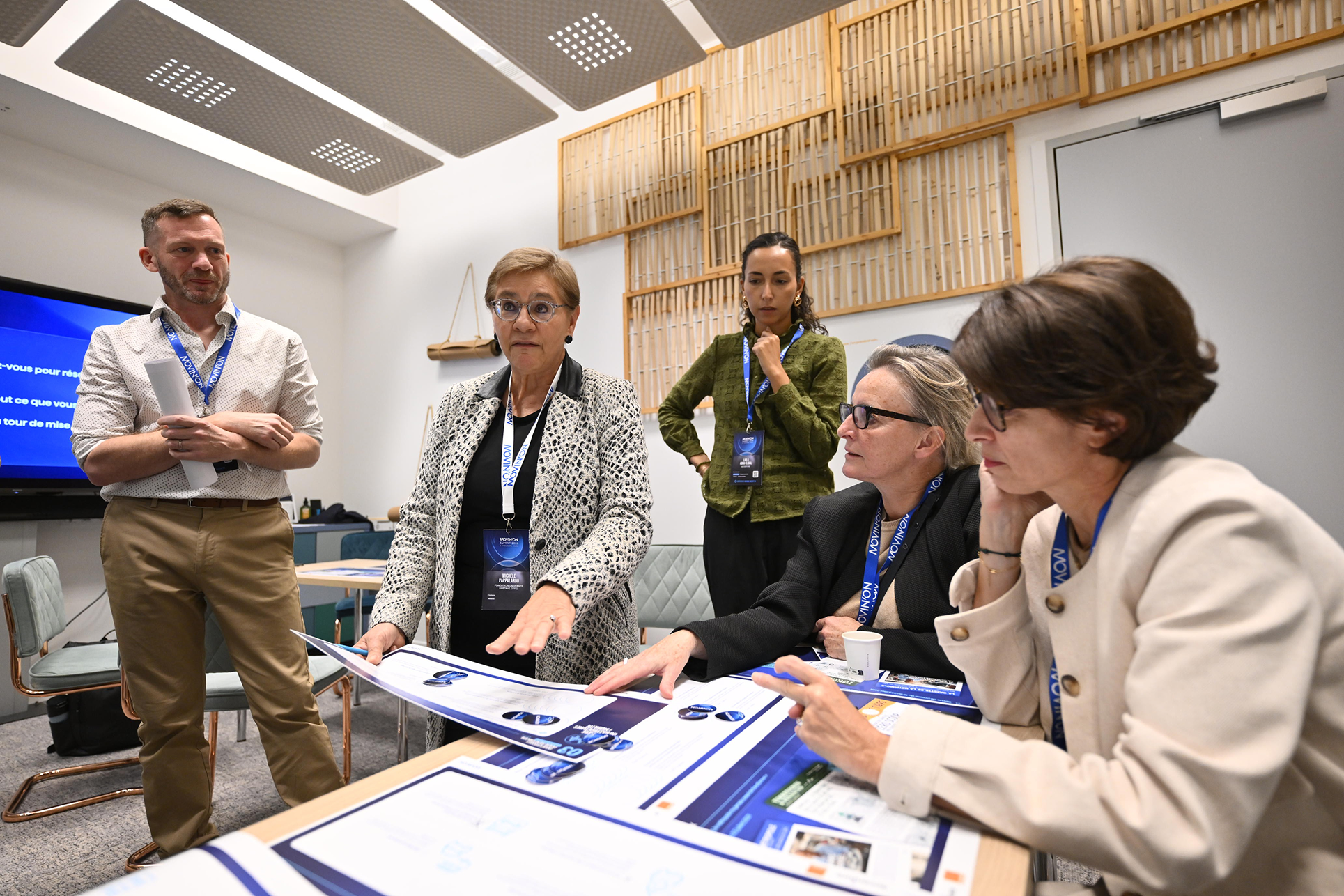
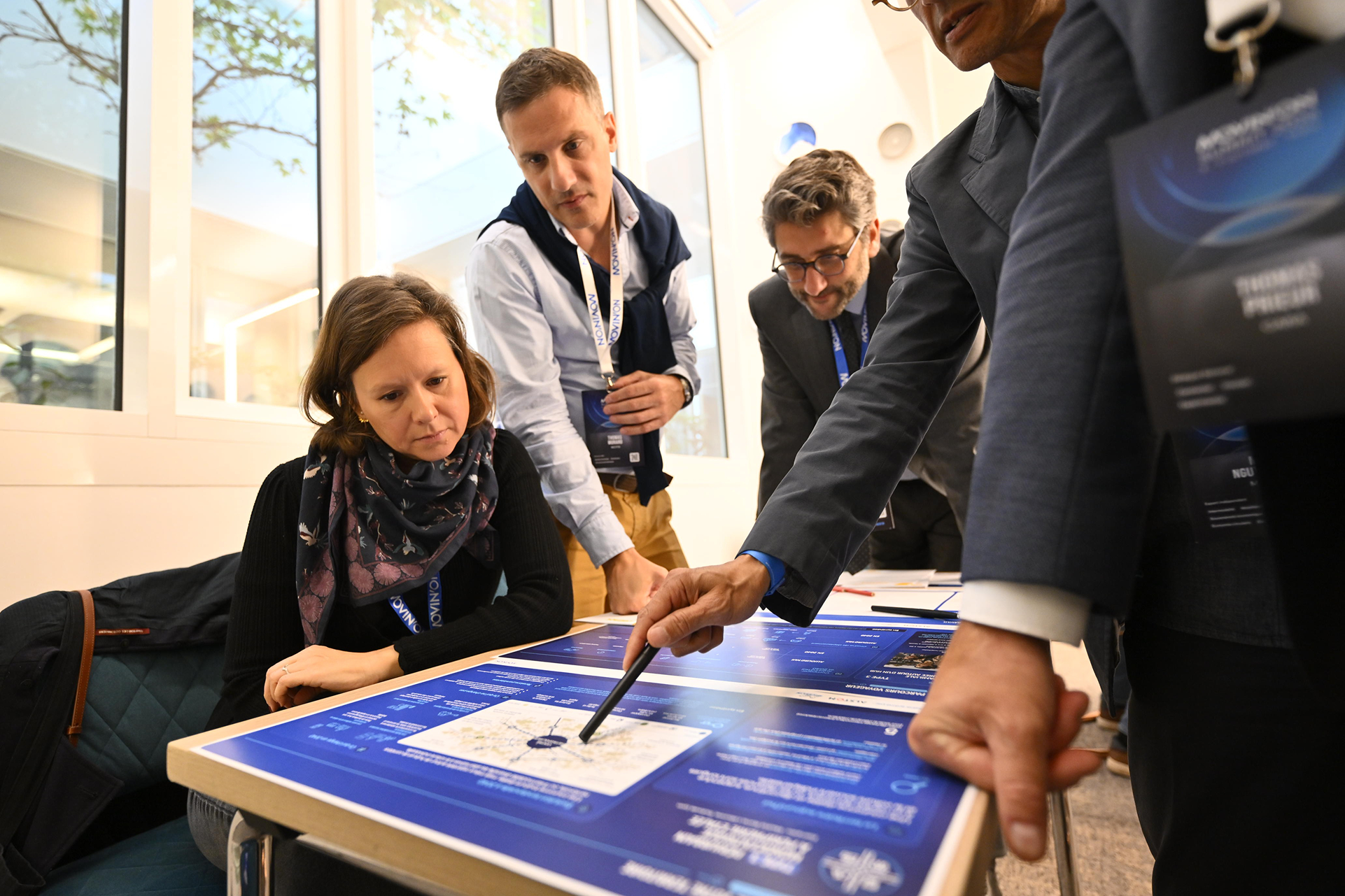
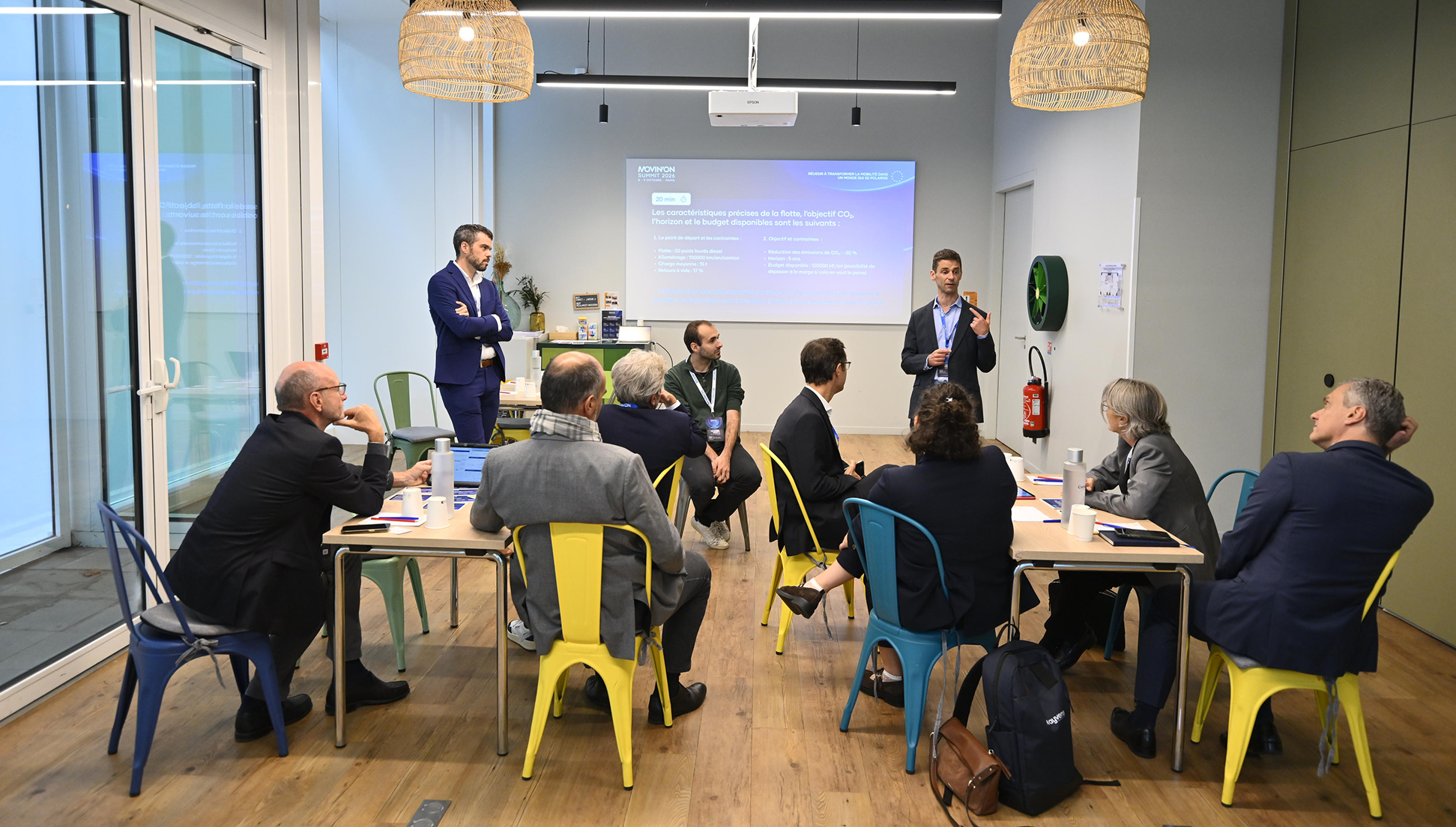
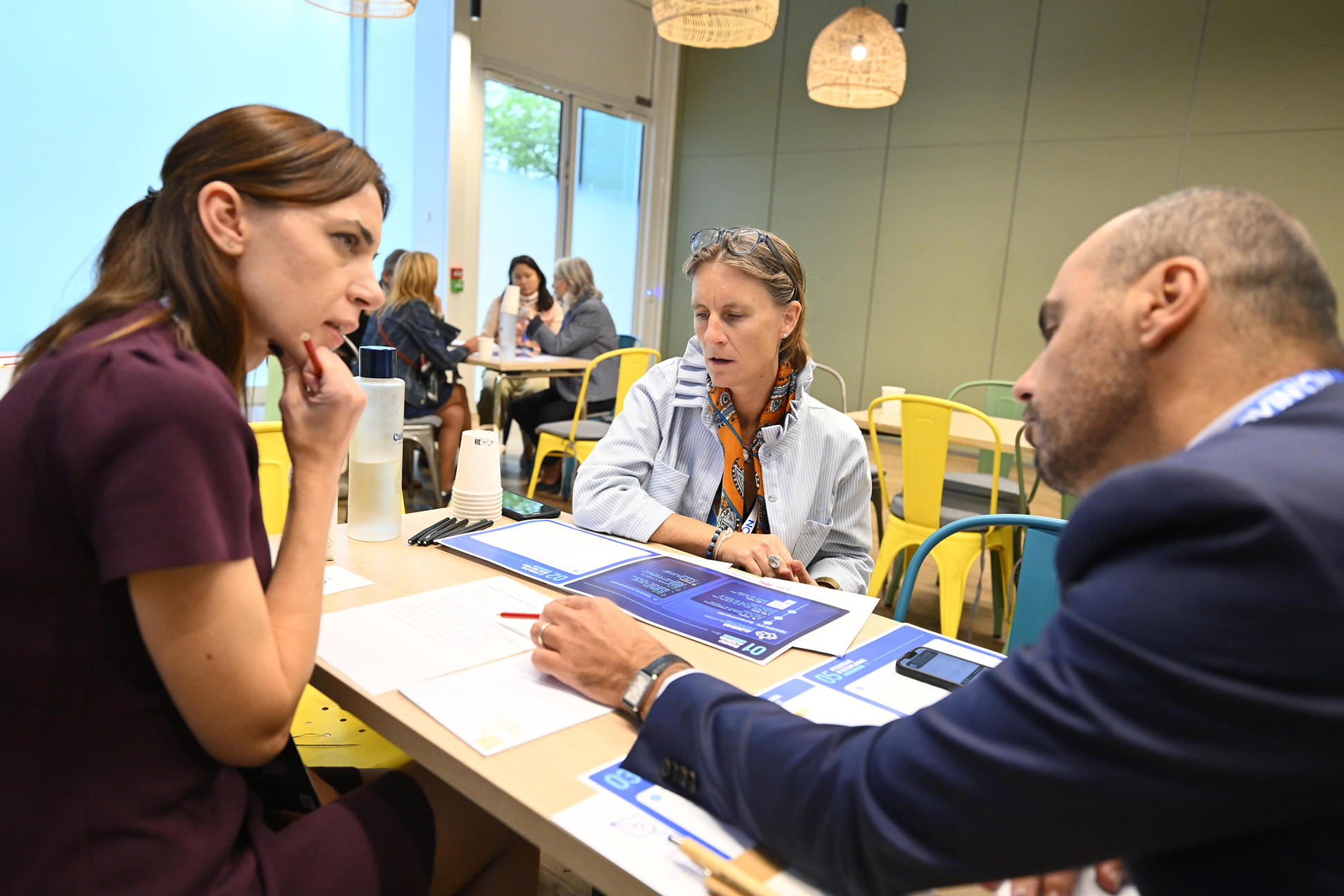
Participants were taken to 2035, into a fictional region whose transport system is orchestrated by an AI named AldermIA. In a short film created by CGI, it presented what it could do—and what it could not resolve: trade-offs that no one had yet settled. It was not allowed to propose slower deliveries; no one had defined who would be responsible in the event of an error; and it could not change working hours, which cause transport networks to become saturated every morning. Working in groups of four to six, participants chose one of these situations and wrote the missing rule: what the AI would be allowed to do, what each stakeholder would concede and receive in return, and who would decide in the event of disagreement. Halfway through, each rule was put to the test: what risks, data and legal framework would be needed for it to apply?
Participants were thus engaged through an approach that turns the usual narrative on its head. The risk does not come from AI disobeying instructions, but from its ability to execute a poorly conceived instruction with great power and speed. We must therefore decide in advance what it should optimise—and how far it should go.
Better Instructions Lead to Better Solutions
During these initial sessions, participants identified three priorities for further work. The first concerns freight. Today, contracts default to the fastest possible delivery, even when there is no urgency. This prevents shipments from being consolidated and shifted to rail or inland waterways, which generate several times fewer emissions. Participants propose making slower delivery an acceptable option for both the sender and the recipient, supported by tools that can recommend when to slow down, an engaging display of the carbon footprint of each choice and, ultimately, a digital passport whose business model remains to be developed.
The idea of better staggering working hours to reduce the concentration of travel during peak periods, by bringing public- and private-sector employers together around their respective constraints, generated real enthusiasm.
The third avenue will focus on the ethical and governance rules needed to keep people at the centre of decision-making.
Representatives of CMA CGM, the Solar Impulse Foundation, Crédit Agricole, Stellantis, Alstom and Fabrique des Mobilités expressed an interest in continuing this work within AI4Mobility, the working group led by CGI at Movin'On on artificial intelligence in support of sustainable mobility.
A Workshop Organisations Can Run for Themselves
The workshop was designed to continue beyond the Summit. Movin'On offers it to companies, local authorities and institutions that would like to run it with their teams, partners or leadership bodies, in two formats. In under an hour, participants recreate the Summit experience. Using a concrete case, they define what AI can do, under what conditions and who decides in the event of disagreement. In the longer, three- to four-hour format, several situations are explored before the method is applied to the organisation's own AI projects.
In both cases, the workshop's main outcome is a shift in perspective. The real challenge is not protecting ourselves from AI making decisions on our behalf, but taking responsibility for what we ask it to do. By increasing our ability to act, AI places us more firmly in a leadership position—and increases our responsibility accordingly.