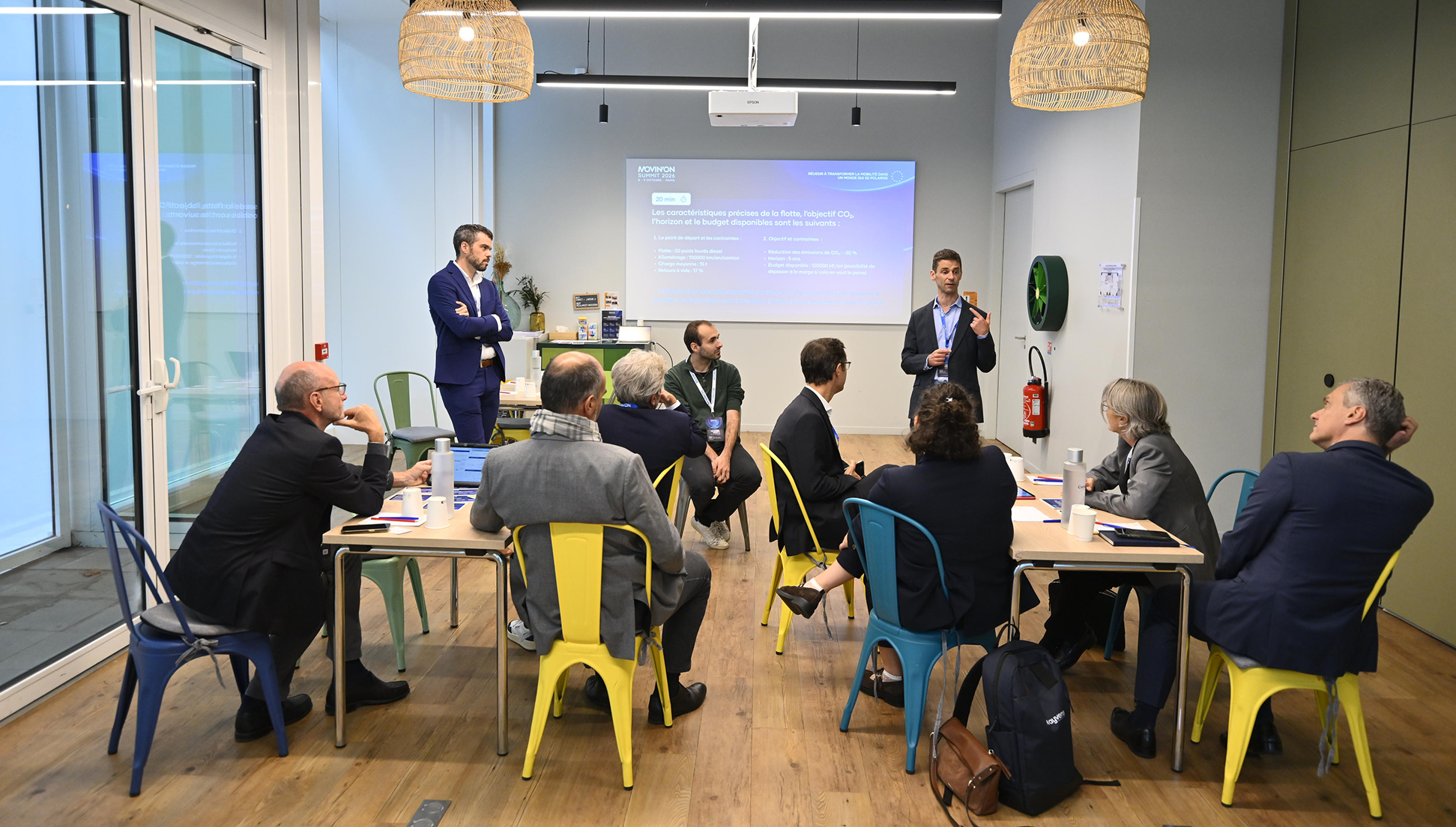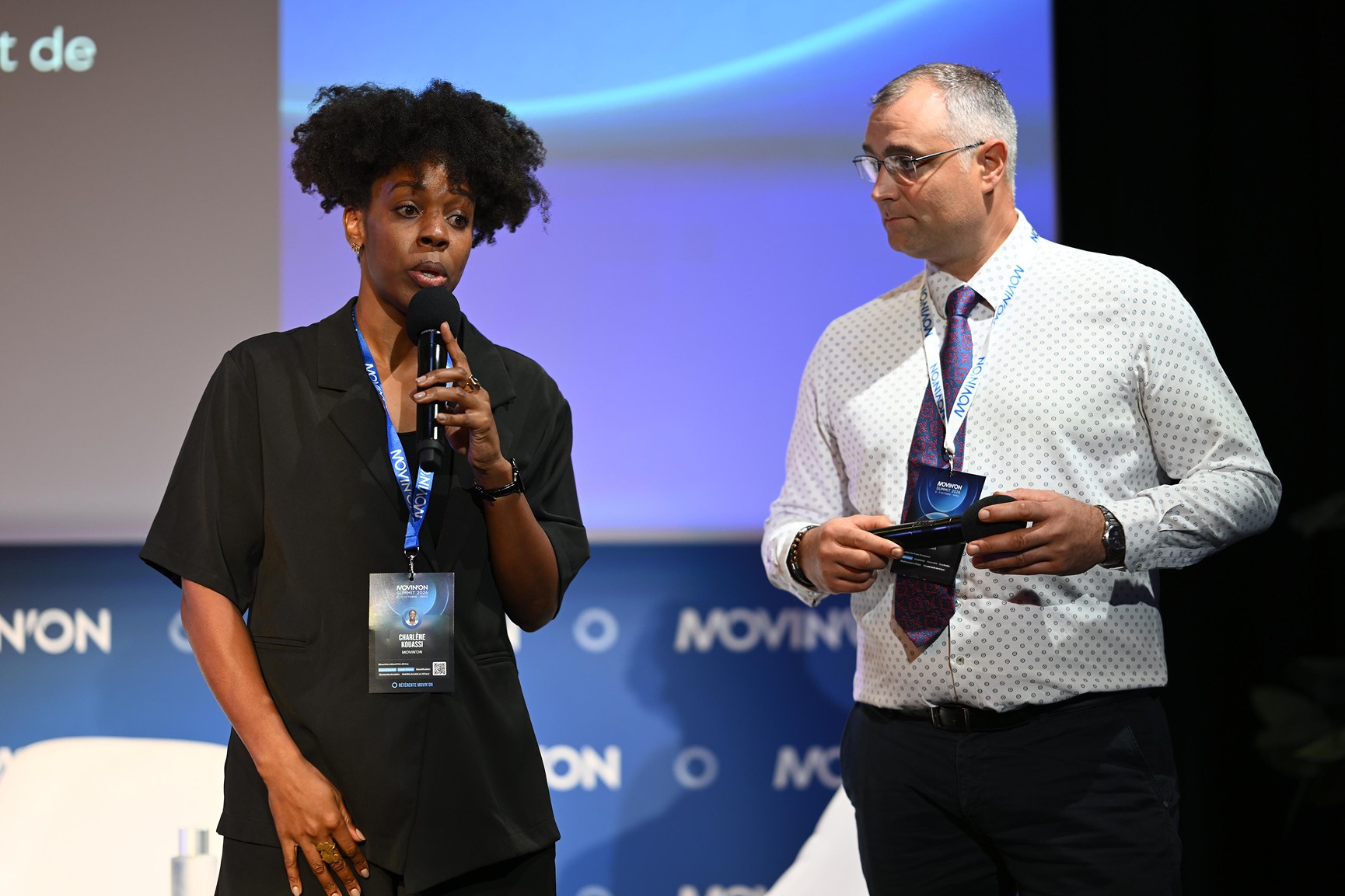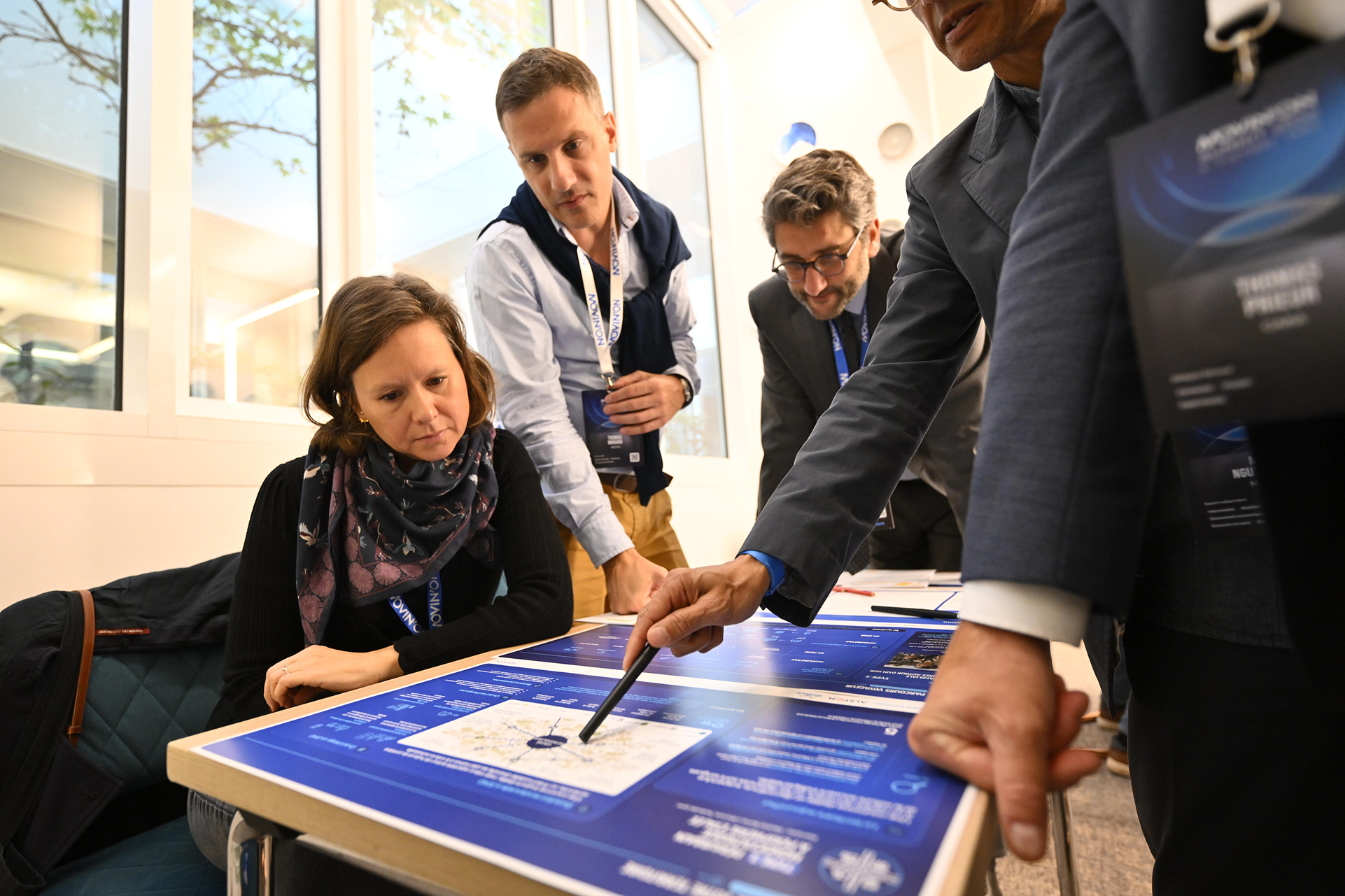
On 9 October in Paris, at the Movin'On Summit, Alstom and Michelin led a workshop in which business leaders, elected representatives and operators stress-tested the future of areas between city and countryside: five types of European peri-urban areas projected forward to 2040 and confronted with shocks that could occur before then.
36.3%1 of Europeans live in small and medium-sized towns and suburbs, the statistical category closest to peri-urban areas.
56%2 of residents in peri-urban belts have a public transport stop less than a ten-minute walk away, compared with 84% in urban centres.
The challenge: areas where cars remain essential
Peri-urban areas are made up of municipalities that depend on a nearby major city, where jobs are concentrated, while retaining a dispersed, rural settlement pattern. Their residents have far fewer alternatives to the car than people living in urban centres. This dependence becomes a vulnerability when a shock occurs: a sustained rise in energy prices, changes in the employment landscape or a climate event. With the planned extension of the European carbon market to road fuels in 2028, the question becomes very concrete: how can we deliver the transition without leaving behind those who have no alternative to their car?
The workshop: a stress test for territories
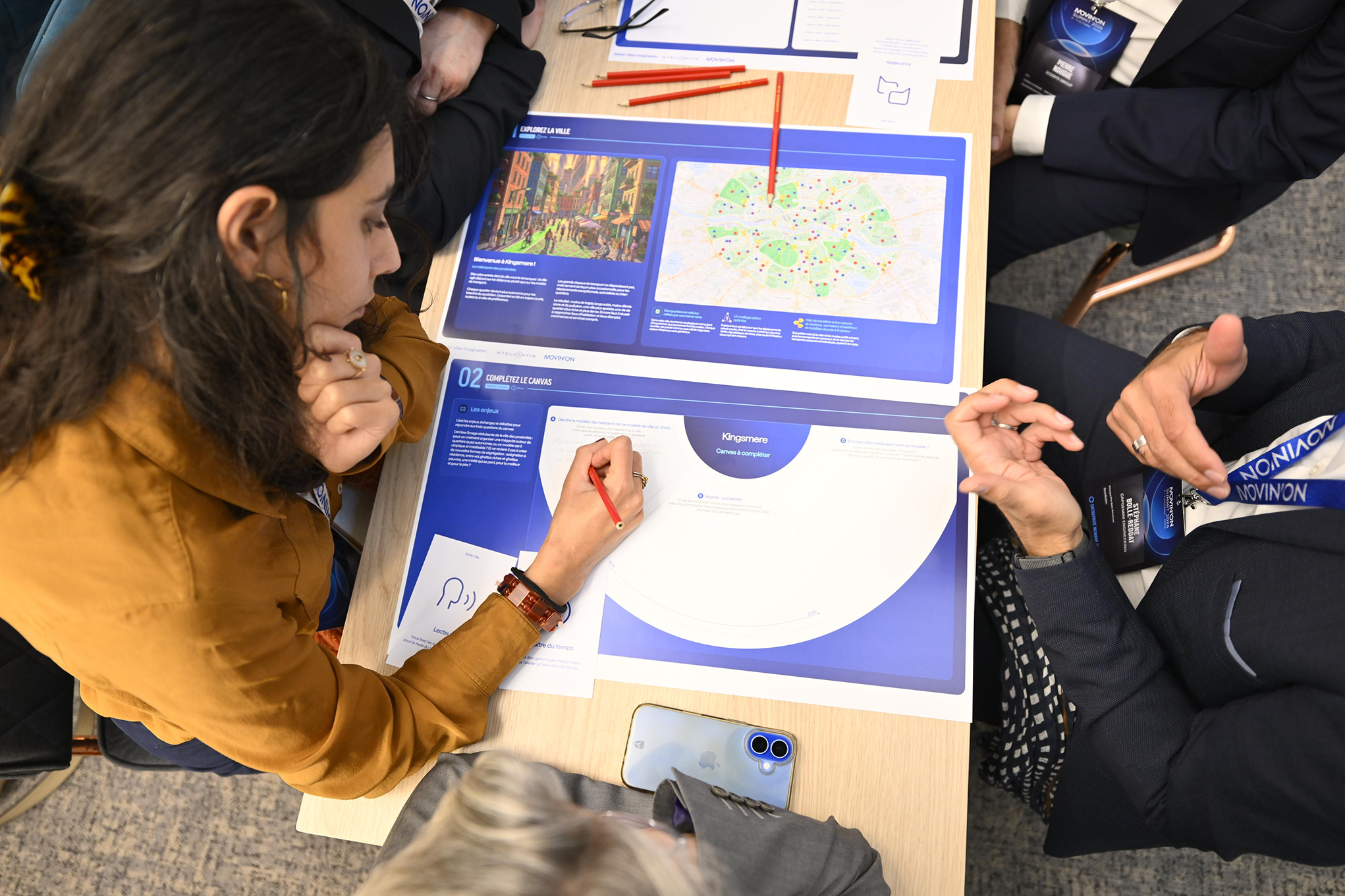
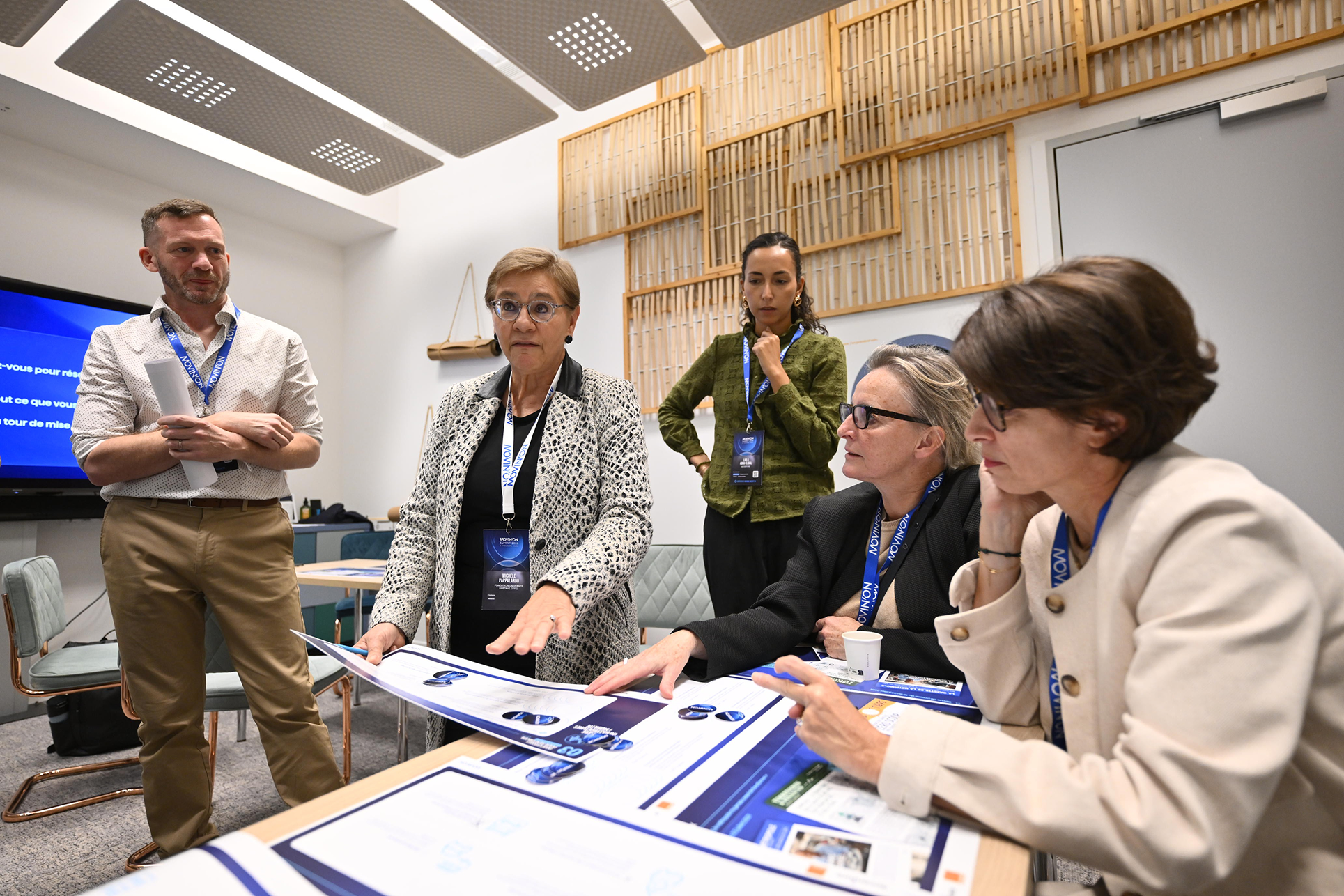
The workshop drew on work by a Movin'On working group, which analysed 287 European urban areas and identified five broad types of peri-urban areas, each projected forward to 2040. Participants included Akkodis, Alstom, Bouygues, CGI, Kantar, MACIF, Michelin, POMA, SNCF, Stellantis and TotalEnergies.
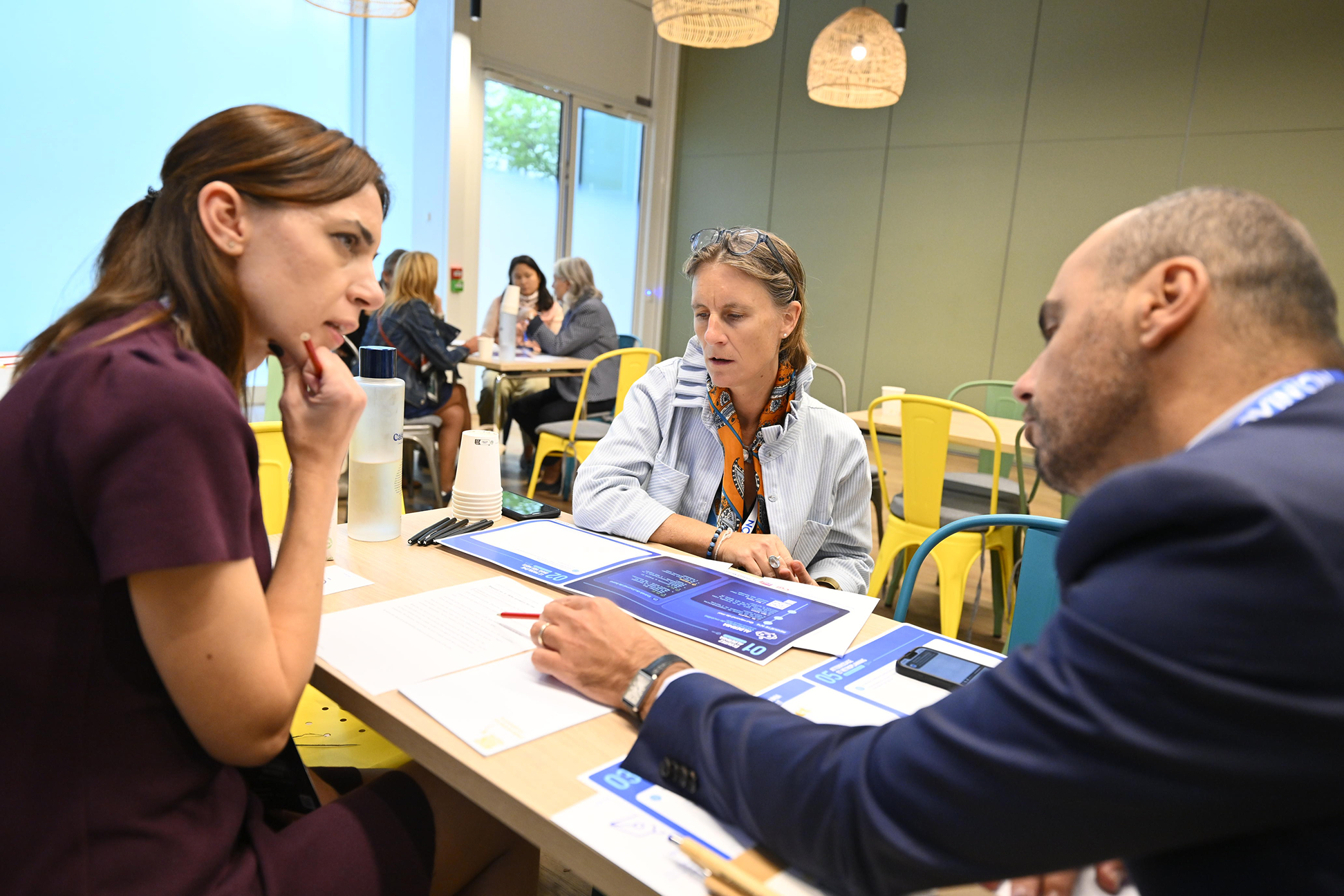
Each group was given a territory, viewed through the daily life of a parent juggling work, school and shopping. They drew two shocks at random, selected one and applied it to the territory, using the same approach as the stress tests conducted by banks: what holds up, what becomes more fragile and what gives way? The final verdict: the territory withstands the shock, adapts or tips into a new situation. One group, faced with an economic shift towards defence, even identified a trend to watch closely: the proliferation of drones.
What emerged
In these initial sessions, participants focused on solutions at local level. They imagined lightweight, flexible public transport capable of adapting to varying needs throughout the day while remaining viable and making use of existing infrastructure; a turnkey offering for municipalities, from design through to financing, combining car-sharing vehicles, solar panels and charging stations; and a robust business model able to withstand fluctuating demand. One group clarified the role of the affordable small electric cars being developed by the industry: they should complement public transport rather than be added alongside it, without requiring new infrastructure or parking spaces, and should be used as much as possible to deliver real value.
The ideas that generated the most interest broadened the discussion: making autonomous mobility accessible to as many people as possible, considering mobility alongside housing and spatial planning, and continuously adapting infrastructure to new ways of living and working. Representatives of Renault, SNCF, Iveco Bus, Maif, Impact France, Mob-ion, Fifteen and la Fabrique des Mobilités expressed interest in continuing work on this topic.
A workshop organisations can run for themselves
The workshop was designed to continue beyond the Summit. Movin'On offers it to companies, local authorities and institutions that want to run it with their teams, partners or leadership bodies, in two formats. In the short format, lasting 45 minutes to one hour, each group stress-tests a territory against a shock—enough to assess the resilience of a strategy in a single session. In the longer format, lasting three to four hours, participants explore the five territories and several shocks, then bring their findings together; the approach can also be applied to the actual territory of a local authority or operator.