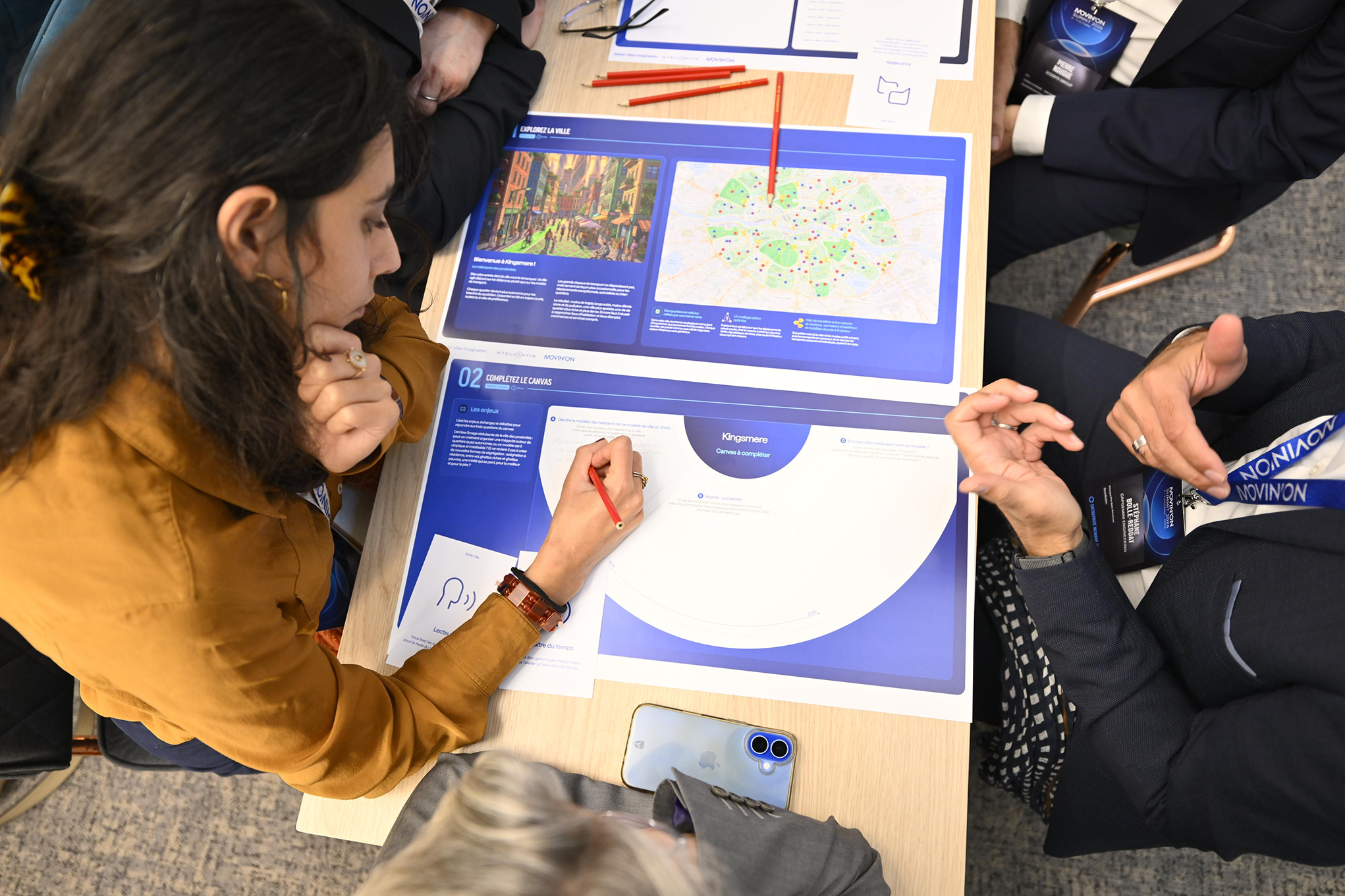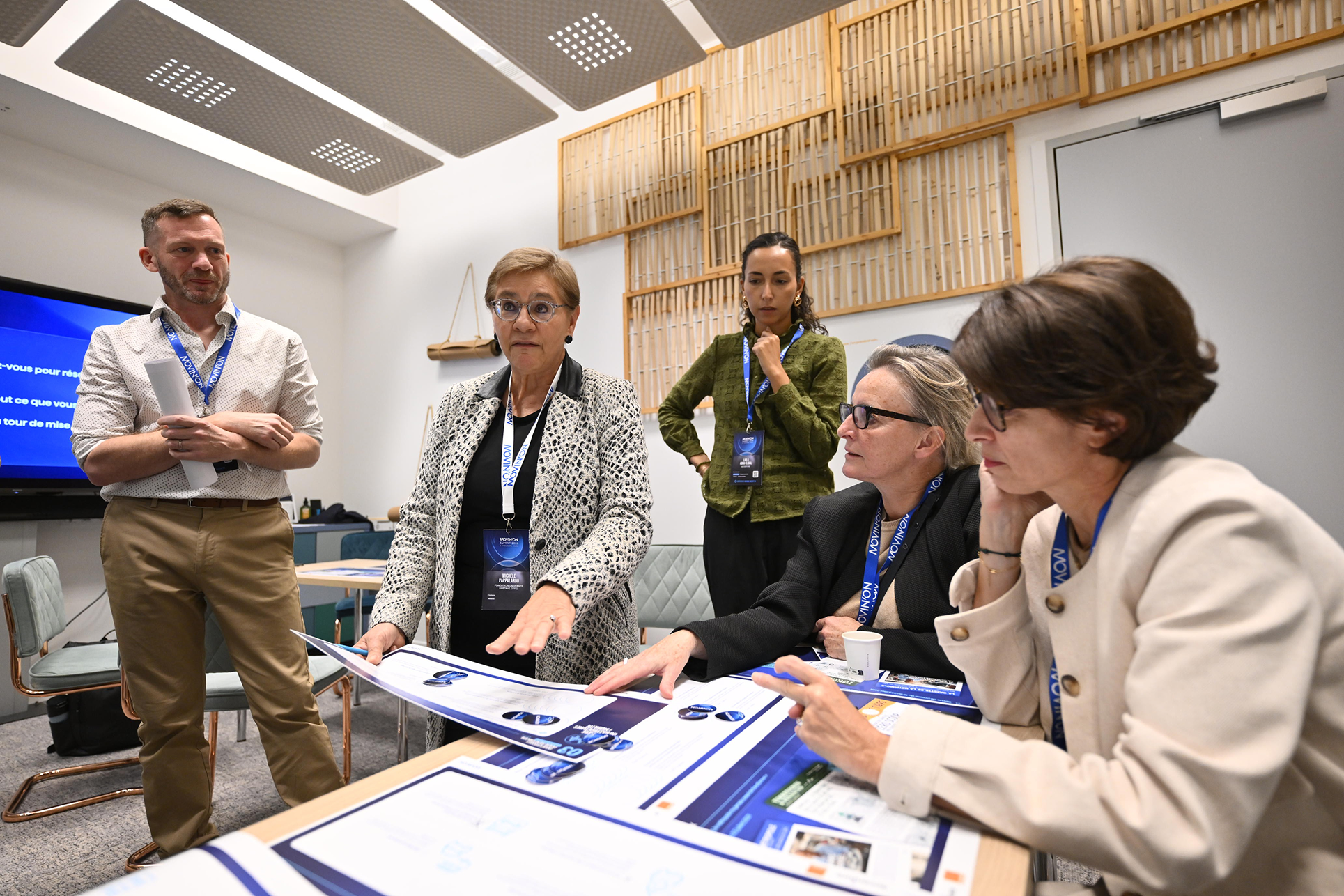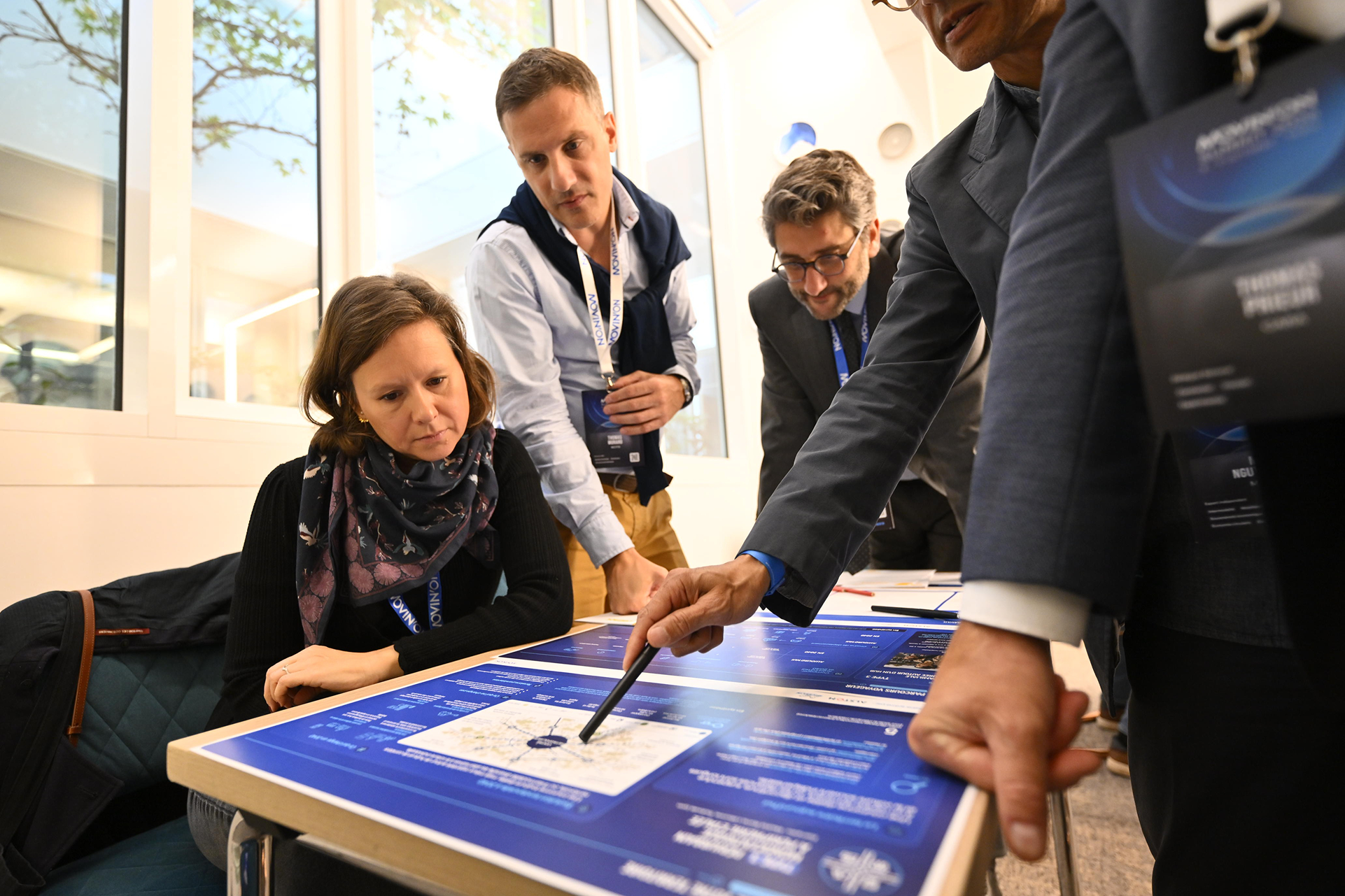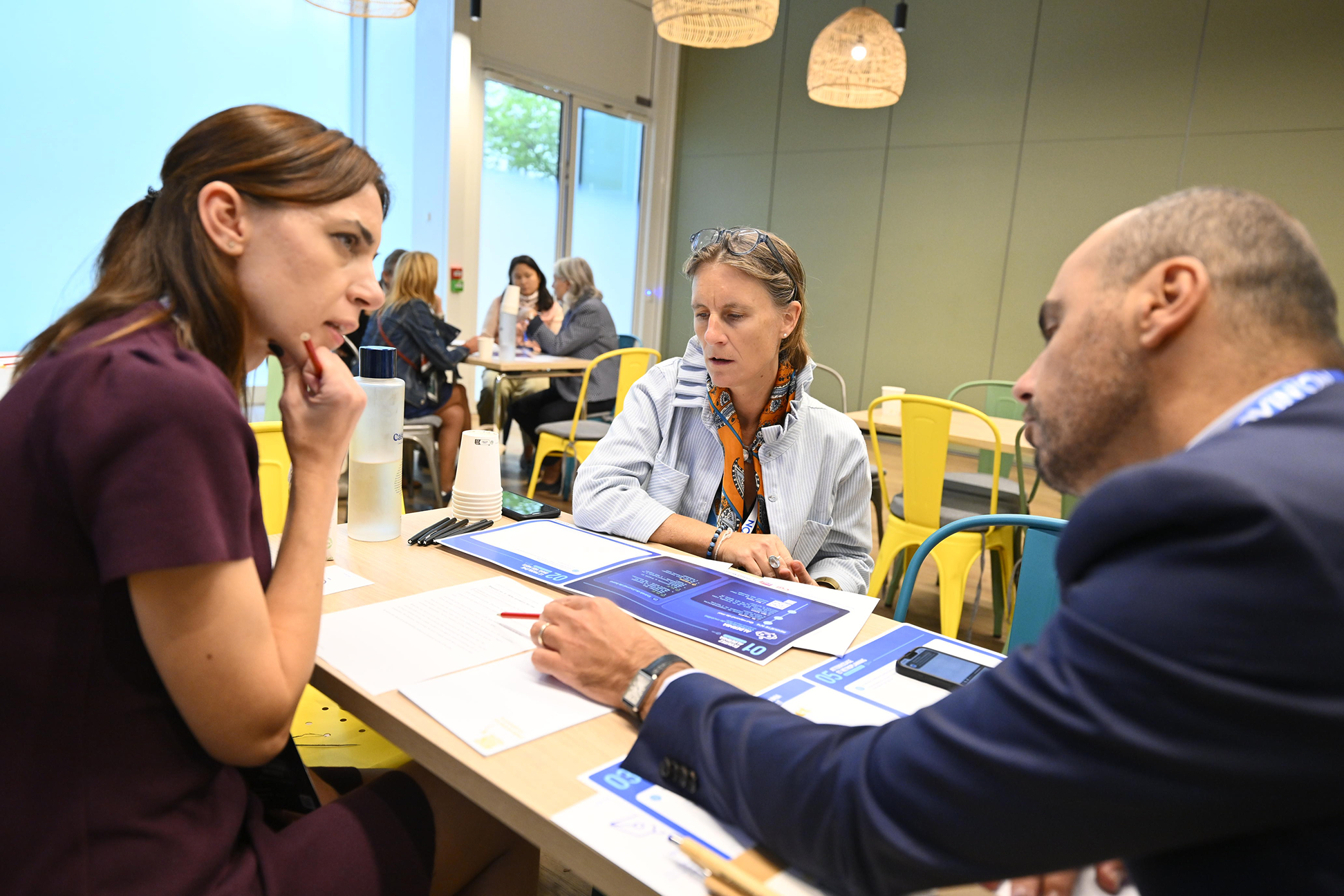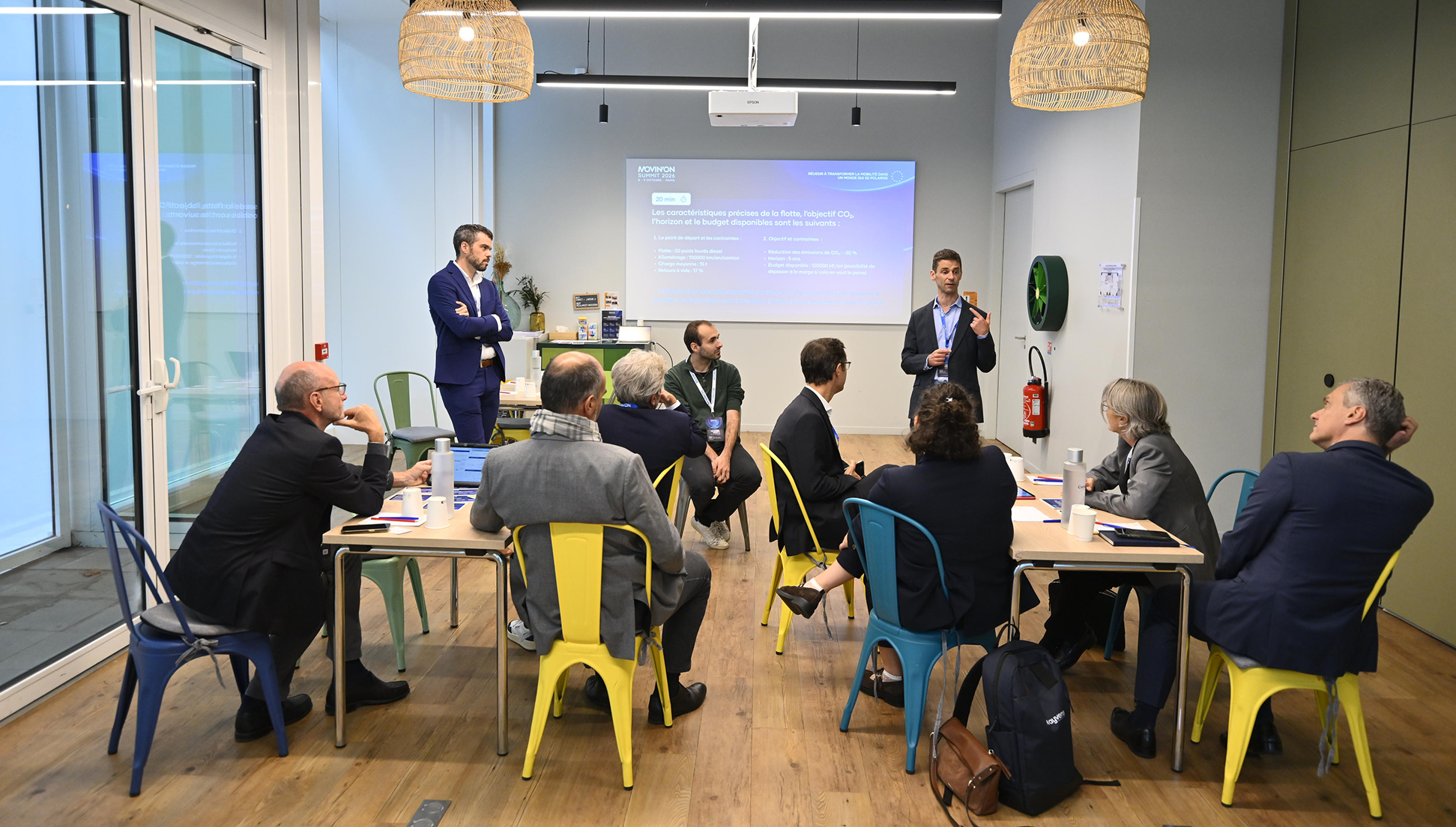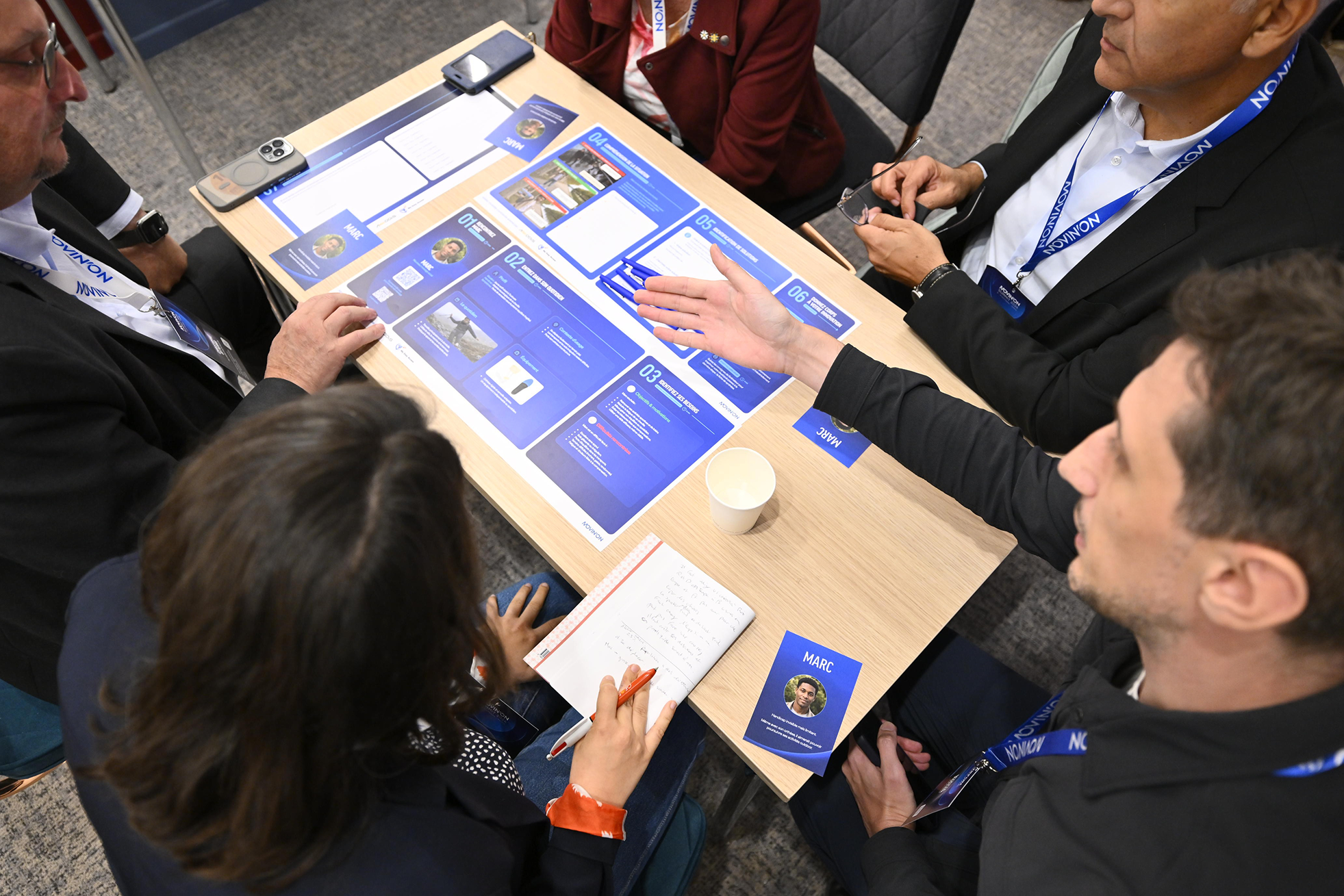
On 9 October in Paris, during the Movin'On Summit, Akkodis and MyEasyAccess hosted a workshop where business leaders, elected representatives and operators followed the journeys of four people with reduced mobility, then explored how to reopen a route that had become inaccessible. Each idea was brought to life as an image, generated and printed on site.
23.9%(1) of Europeans aged 16 and over report an activity limitation.
68%(2) of people who have difficulty walking use no mobility aid—not a cane or a wheelchair.
Just a few metres can make a journey impossible
Since June 2025, new European rules have strengthened the accessibility of transport services, from passenger information to ticketing. But physical barriers remain. A step, an unstable surface or a broken escalator can make a commute, an appointment, a visit or simply the journey home significantly more difficult.
Reduced mobility extends far beyond the image of a wheelchair user. It can be permanent or temporary and take many different forms, including a balance disorder, invisible pain, an injury or the effects of ageing. A pushchair or a large suitcase can also reveal the same barriers on a poorly designed route. And even when assistance is available, many people choose not to use it because it singles them out.
The workshop: four people, four journeys to reopen
Each group accompanied one person: Camille, who uses a powered wheelchair; Léa, who has a balance disorder but refuses to use a cane; Hervé, whose disability is not visible; and Marc, who wears an ankle brace. These profiles were developed from Akkodis’ field observations and a Kantar study of 252 people who have difficulty getting around. A short voice message recounted each person’s latest mishap. Participants reconstructed the journey, identified precisely what was blocking the way, then imagined the innovation that could reopen access—and saw it brought to life as an image.
At the end of the session, two solutions already in development were presented so that the workshop’s work and participants’ feedback could help improve them: an all-terrain access device developed with Akkodis, and the MyEasyAccess app, which identifies genuinely usable routes, supported by photographs.
Starting with a concrete barrier changes how we innovate
During these initial sessions, participants developed highly practical ideas. For Léa, a walking aid could become an accessory people feel comfortable using, rather than an object that stigmatises them. For Hervé, whose journey was blocked by a broken escalator, backup solutions should be planned for when equipment fails, and transport apps should provide real-time information tailored to different disability situations. For Marc, a smart orthosis or lightweight exoskeleton could help him return to activities that are currently difficult, such as mountain hiking.
Another point became clear throughout the discussions. These innovations must be tested in real-life conditions, across the entire journey, because a solution that performs well in isolation may remain unusable if just one link in the journey is still inaccessible.
Representatives of Alstom, ATH and Faircar expressed an interest in continuing the work on this issue. These ideas will feed into Movin'On’s working group on travel for people with reduced mobility, led by Akkodis. In November, the group will select the solution to develop further, with the aim of producing an initial prototype in 2029 and the 2030 Olympics in sight.
A workshop to bring into organisations
The workshop was designed to live on beyond the Summit. Movin'On offers it to companies, local authorities and institutions that want to run it with their teams, partners or leadership bodies, in two formats. In around an hour, participants recreate the Summit experience. They follow one person’s journey, gradually discover what makes it impossible and work together to imagine a solution that could reopen it. It is a highly practical way to bring accessibility into the thinking of a leadership team, project team or seminar.
In the longer format, lasting three to four hours, participants can explore all four journeys and then compare them with their organisation’s sites, vehicles or services. The exercise helps identify barriers that have become invisible to those who encounter them every day, then brings out an initial solution to test with the users concerned.
The shift in perspective may be the workshop’s first outcome. For a few hours, accessibility stops being an abstract or regulatory issue. It becomes what it means to the user: whether or not they can complete their journey.