Transport accounts for a significant share of the environmental footprint of the products we consume. Yet its impact remains largely invisible at the point of purchase. Could making this information accessible help steer choices towards lower-impact modes of transport?
This is one of the avenues explored by Movin’On, the New Energies Coalition and Kantar through a study unveiled at the Movin’On Summit 2026. The findings were enriched by the work of Lorraine Whitmarsh of the University of Bath and the experience of Simone Morgagni of SNCF on the conditions for behaviour change. Together, they remind us that while information can help, behaviour changes above all when supply, prices, infrastructure, social norms and the wider context make a new choice both possible and desirable.
Featuring:
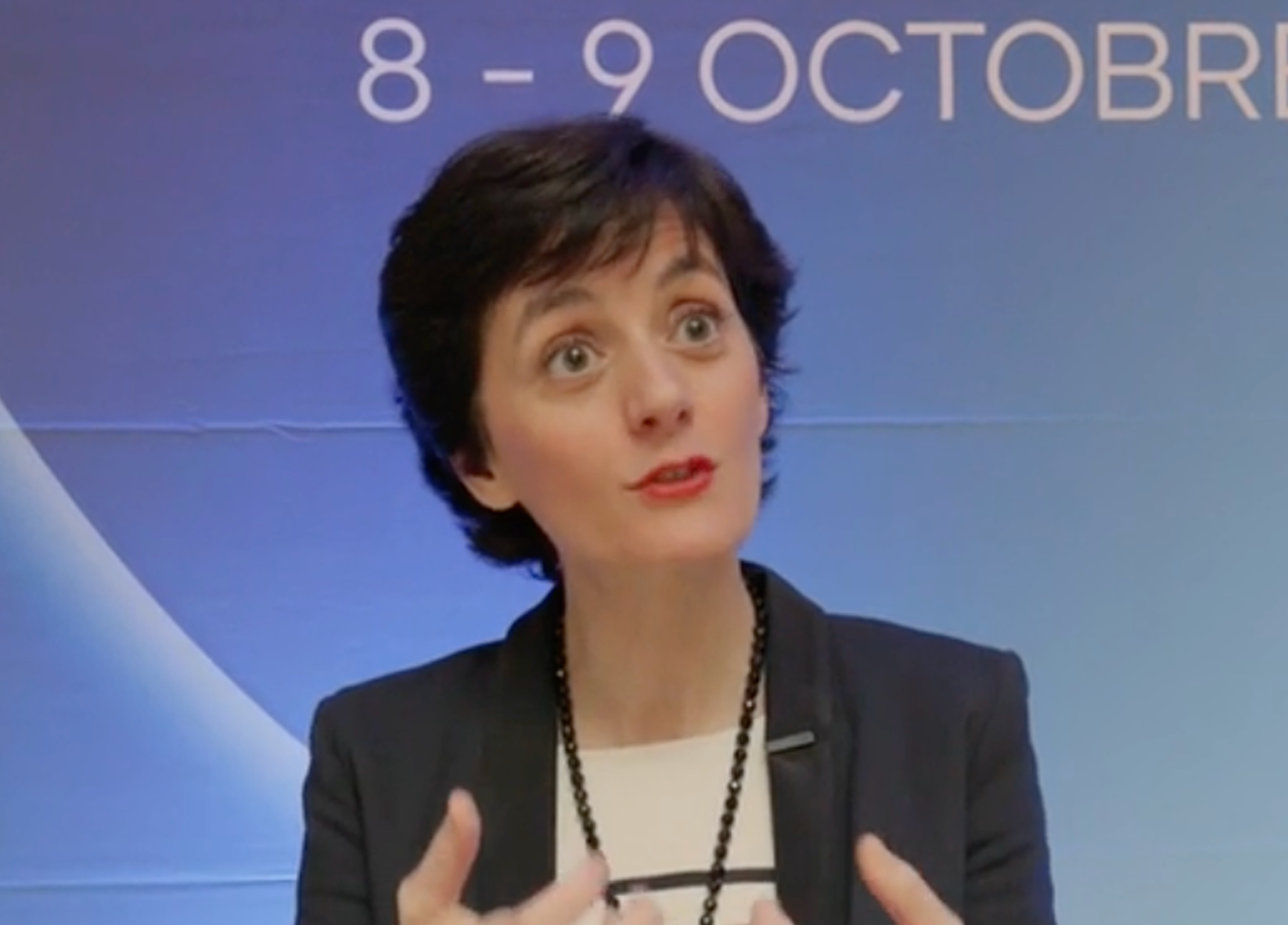
Lorraine Whitmarsh, Professor of Environmental Psychology, University of Bath
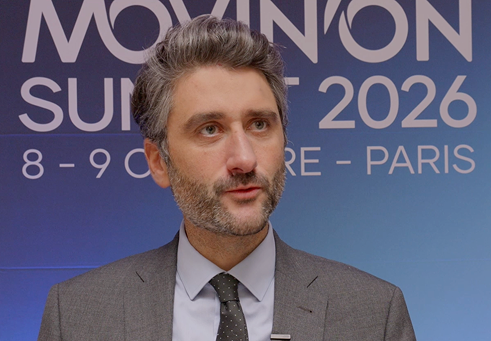
Jonathan Hall, Head of Sustainable Transformation, Kantar
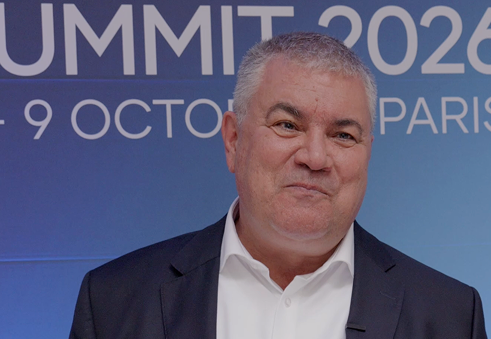
Émilie Espanet, Secretary-General, New Energies Coalition (CMA CGM)
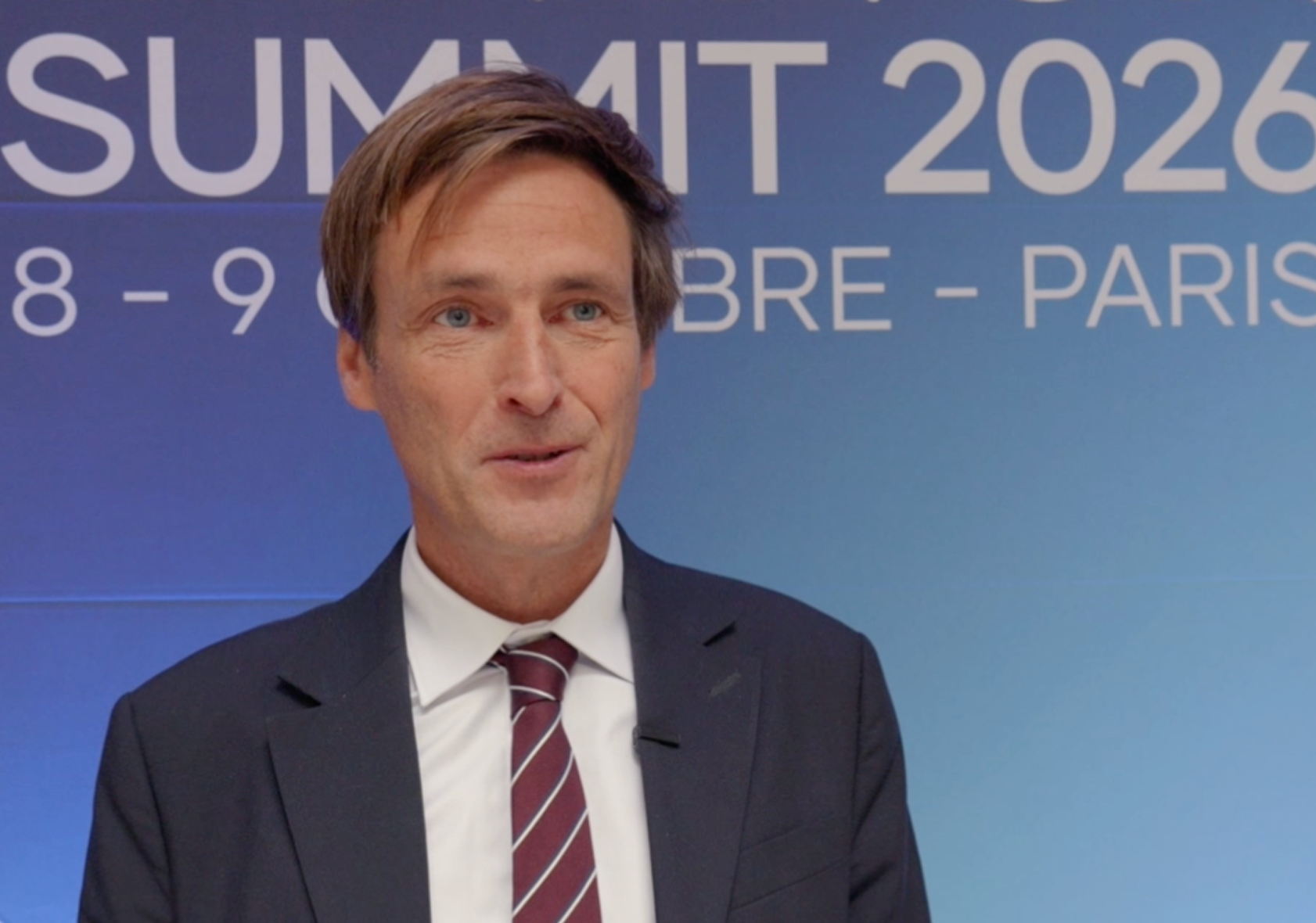
Simone Morgagni, Director of Research, Safety & Development of Shared Mobility, SNCF Group
KEY TAKEAWAYS
1. Transport is a blind spot in sustainable consumption
The study, conducted among 2,000 consumers in France and Germany, reveals a paradox: only 31% say they are informed about the mode of transport used before their purchases, while 65% would like to know more about its environmental impact.
“This is not an interest gap. It is a visibility gap.” Jonathan Hall, Partner, Head of Sustainable Transformation, Kantar.
For Émilie Espanet, Secretary-General of the New Energies Coalition, these findings also highlight a gap between consumer expectations and how companies perceive them. While companies mainly approach transport decarbonisation through the lens of their environmental commitments, consumers are interested in information that is directly accessible at the point of purchase.
Émilie Espanet also points out that transport decarbonisation could account for less than 0.5% of a product’s final price, according to work conducted by the coalition in partnership with Movin’On. This potentially limited additional cost opens the way to new systems for informing consumers and recognising companies’ efforts.
The Transport Score could therefore help bring companies’ commitments closer to consumer expectations by making visible an environmental impact that is currently largely overlooked.
“There is a misalignment between what corporates think about what customers want and what real customers want.” - Émilie Espanet, Secretary-General, New Energies Coalition
2. A Transport Score could influence purchasing decisions
“Every day, we weigh up cheaper against better. Often, better loses out not because of the price, but because of uncertainty.” Gaël Quéinnec, opening the Movin’On Summit 2026
The study tested interest in information about transport-related emissions reductions through several purchasing scenarios.
42% of respondents chose an option combining fair trade with lower-emission transport. In addition, 15% said they would be willing to pay more. These stated intentions reveal potential, but do not yet establish that actual behaviour would change in a retail setting.
3. Provide information at the right time, while choice is still possible
For Simone Morgagni, representing SNCF, the effectiveness of environmental information depends as much on its content as on the context in which it is presented.
An indicator can influence a decision when it enables people to compare several offers. But its effect remains limited if the choice has already been made or if the sustainable alternative is too expensive, complex or difficult to access. Information alone is therefore not enough: the context in which people make a choice matters just as much.
“Information and incentives [...] are extremely important. But [...] the timing and context in which they are presented are probably even more important.” Simone Morgagni - SNCF
4. Changing behaviour requires action on the context, not just information
Lorraine Whitmarsh, Professor of Environmental Psychology at the University of Bath, reminded us that people often support changes they nevertheless struggle to put into practice.
Habits, available infrastructure, economic constraints and social norms directly shape individual decisions.
Behavioural science therefore distinguishes between interventions that seek to convince individuals (information, communication, education) and those that directly change the context in which they act: economic incentives, available products and services, regulation or infrastructure. Information is most effective when these contextual levers are aligned.
Timing also matters: habits become more malleable during periods of disruption or change in people’s lives or circumstances (moving house, changing jobs, a new mobility offer), creating a particularly favourable window for introducing new practices.
She also underlined the importance of targeting people who are already willing to change but still face practical barriers.
“They are the ones that really we need to be focusing our attention on [...] They just need the barriers removed.” Lorraine Whitmarsh - Professor of Environmental Psychology, University of Bath
The Transport Score could therefore become a lever for action, provided it is part of an environment that genuinely makes sustainable choices easier.
TENSIONS AND OPEN QUESTIONS
A promising tool—but how can its legitimacy and credibility be guaranteed? And what exactly should it measure: transport-related greenhouse gas emissions alone, or a broader environmental footprint? The 25 interviews conducted with economic stakeholders reveal interest in the principle of a Transport Score, but also significant reservations.
Consumers want to better understand transport’s impact, but methods remain insufficiently harmonised. A carbon score would be easier to understand; a more comprehensive environmental score would provide a fuller picture, but would be more complex.
Another challenge is that 56% of consumers believe a more sustainable option should not cost more.
The tension is therefore twofold: how can we provide reliable, comparable information, and how should the cost of the transition be shared? This is precisely why the Transport Score should be tested in real-world conditions before considering broader deployment.
PATHWAYS TO ACTION
Build reliable, easy-to-understand information based on shared calculation methods that are consistent with the products’ overall environmental footprint.
Test the Transport Score at the point of purchase in sectors such as fashion, food and technology equipment, in order to measure its real influence on decisions.
Combine information with changes to the conditions in which choices are made, bringing together brands, transport operators, retailers and public stakeholders to make sustainable alternatives more accessible.
Make the most of “moments of change”, when habits are easier to shift: moving house, changing jobs or taking up a new mobility offer.
WHAT’S NEXT FOR MOVIN’ON?
Make the Transport Score a platform for collective experimentation
This study gives Movin’On and its partners an initial basis for exploring a tool that could help connect companies’ efforts to reduce transport’s footprint with consumers’ everyday decisions.
The next step would be to structure a collective experiment bringing together manufacturers, transport operators, retailers and behavioural experts to test the reliability of the Transport Score, how well it is understood and its actual influence on choices.
For Movin’On, the challenge is to make the Transport Score not just an information tool, but a lever for trust and change in practices—one capable of connecting companies’ commitments with consumer decisions.